Category: Marrakech Activities | Reading Time: 8 Minutes
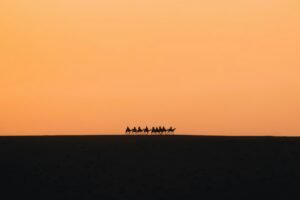
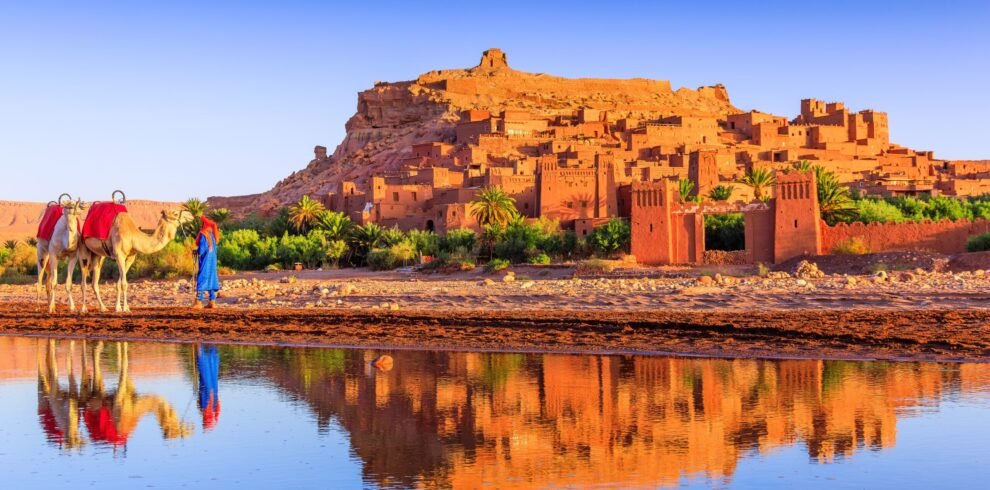
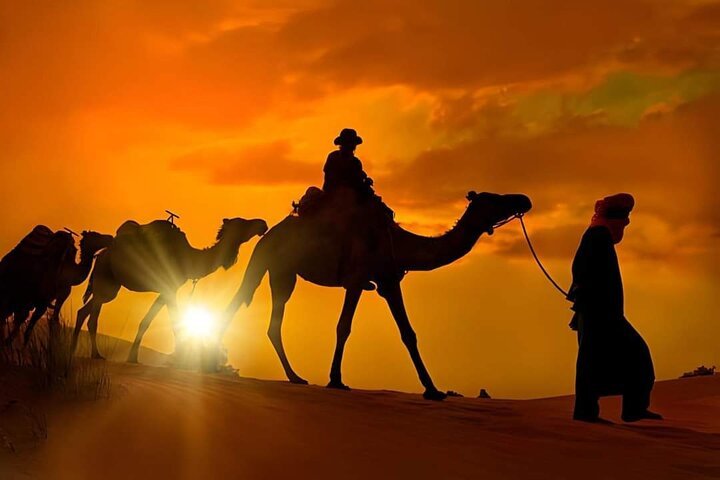
It is the quintessential Moroccan snapshot: the silhouette of a rider atop a dromedary, swaying gently against a backdrop of endless horizons. For almost every traveler planning their first trip to the Red City, a Marrakech camel ride is at the very top of the bucket list.
But here is the secret that most travel brochures don’t tell you: There is no sand desert in Marrakech.
Marrakech sits in a plain near the mountains, not in the dunes. So, when you book a camel ride here, where do you actually go? And how do you ensure the animals are treated well?
From the ancient Palm Grove to the lunar landscapes of Agafay, this is your honest, informative guide to finding the best Marrakech camel ride for your itinerary.
1. The Two Main Locations: Palmeraie vs. Agafay
To find the “best” experience, you first need to decide on the backdrop. There are two distinct locations for camel trekking near the city.
Option A: The Palmeraie (The Classic Choice)
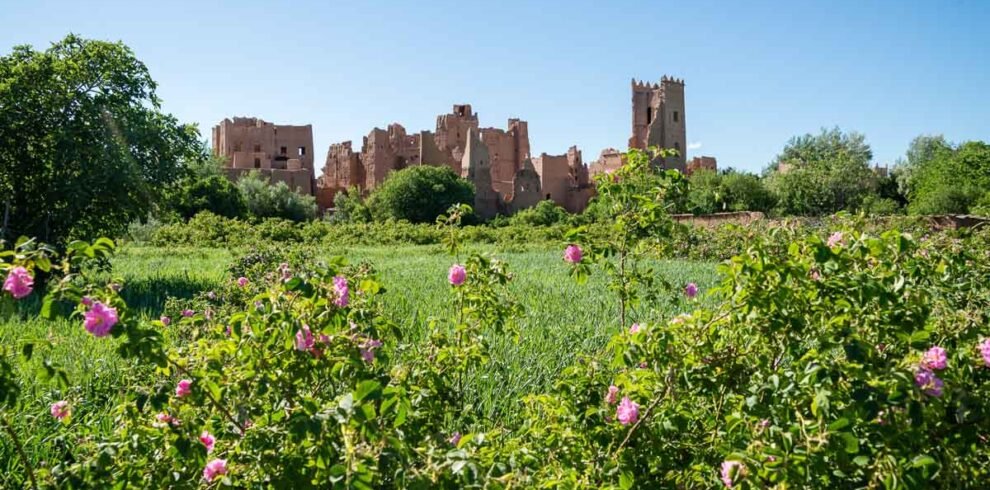
The Palmeraie is a vast oasis located just 15–20 minutes from the city center. It contains over 100,000 date palm trees planted during the Almoravid dynasty.
- The Vibe: Lush, historic, and very close to town.
- The Experience: You ride through dirt paths winding between thousands of palm trees. You will often pass through traditional Berber villages.
- Best For: Families with young children (short travel time) and travelers on a budget or strict schedule.
- Time Needed: 2 hours total (including transfer).
Option B: The Agafay Desert (The Scenic Choice) Best Marrakech Camel Ride
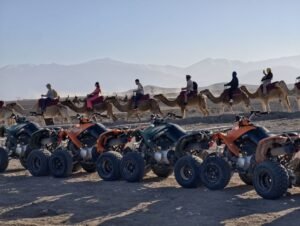
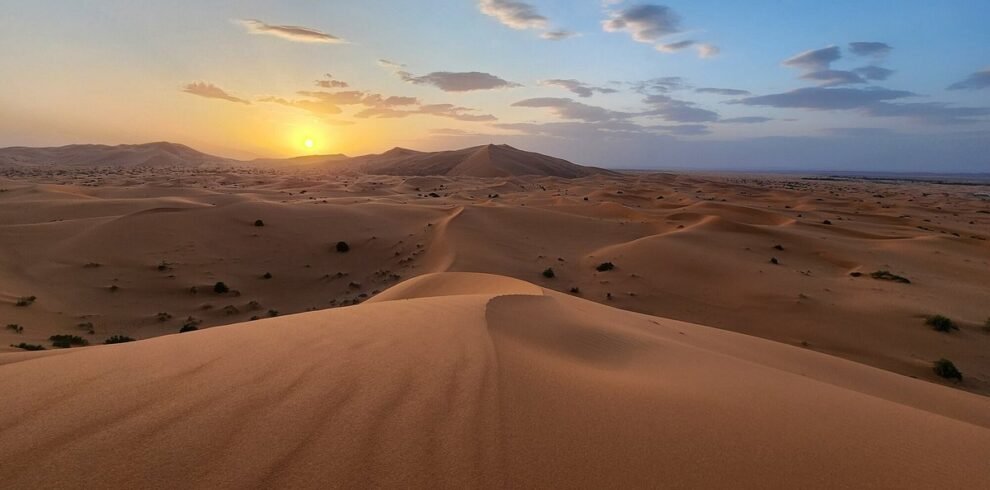
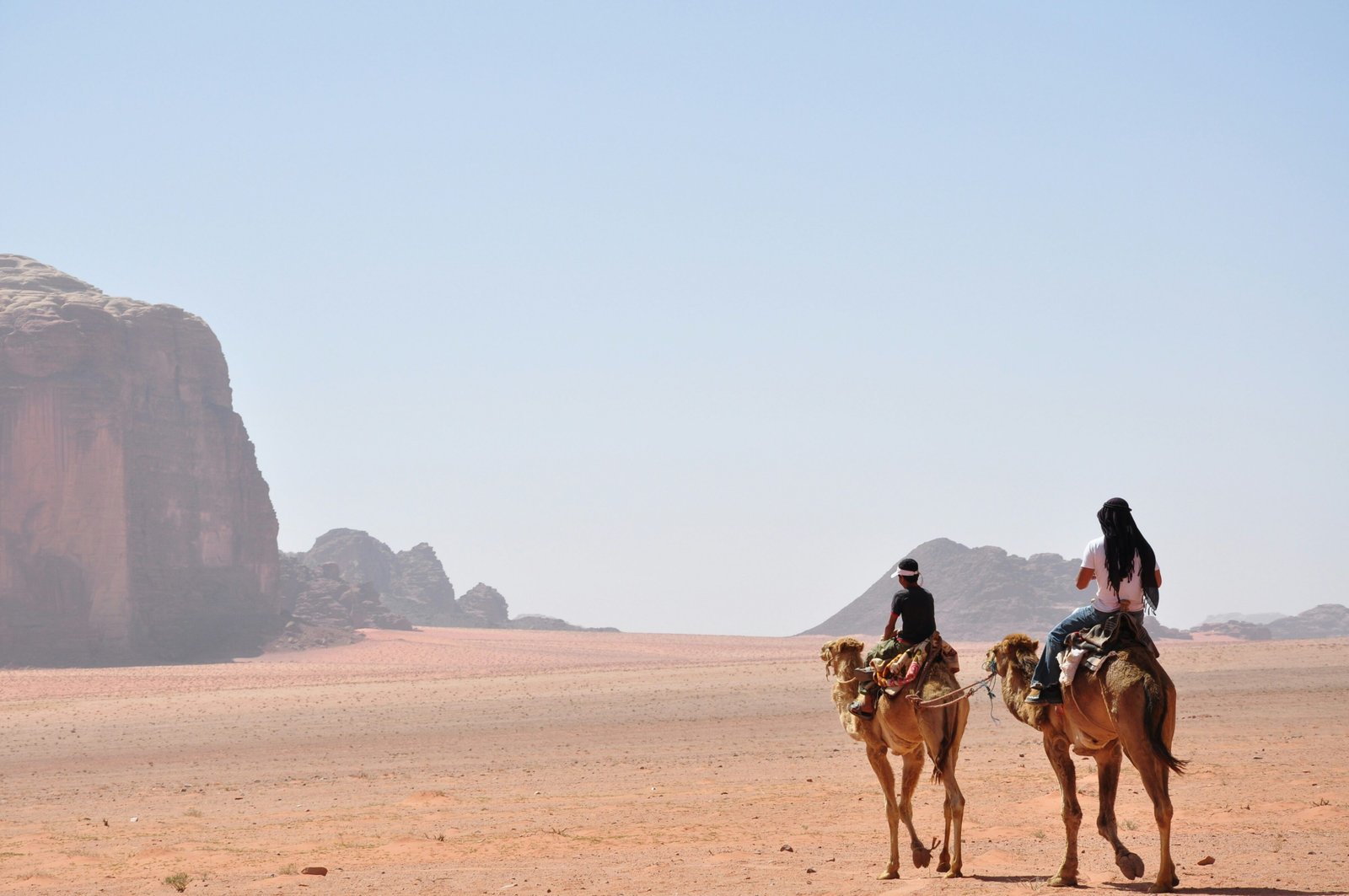
Located about 45 minutes south of Marrakech, Agafay is a “stone desert.” It has no sand dunes, but it features rolling hills of rock that look like the surface of the moon, with the snow-capped Atlas Mountains in the distance.
- The Vibe: Dramatic, open, and romantic.
- The Experience: The views here are superior to the Palmeraie. The silence is deeper, and the horizon is wider.
- Best For: Couples, photographers, and sunset lovers.
- Time Needed: 4–5 hours total (usually includes tea or dinner).
2. What Actually Happens on the Tour?
Whether you choose the palms or the stone desert, the flow of a Marrakech camel ride is usually consistent.
- The Pickup: Your driver collects you from your Riad or hotel.
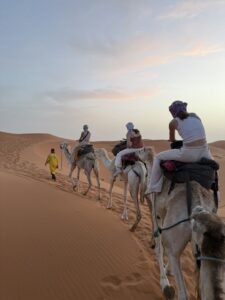
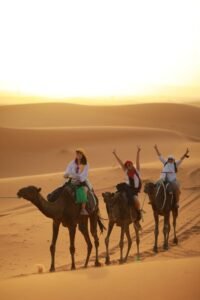
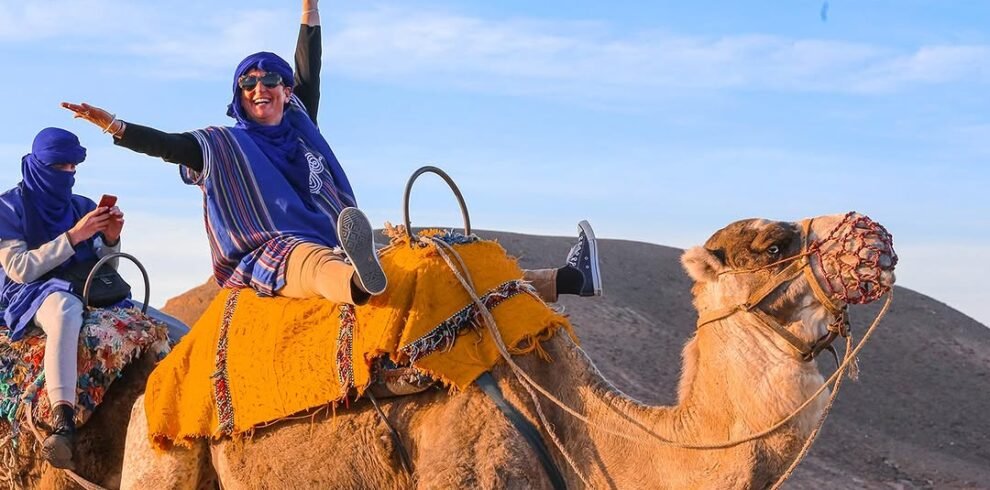
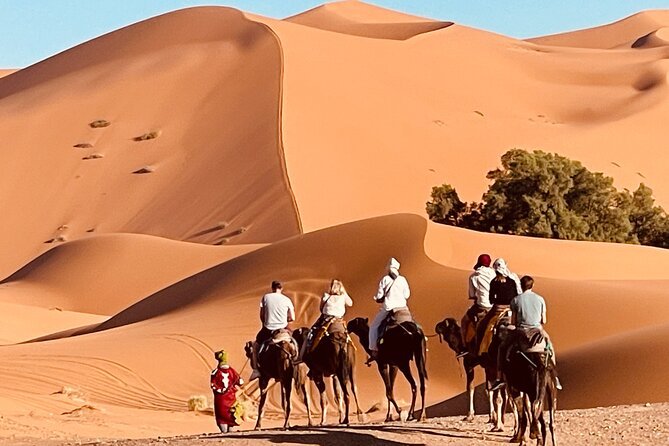
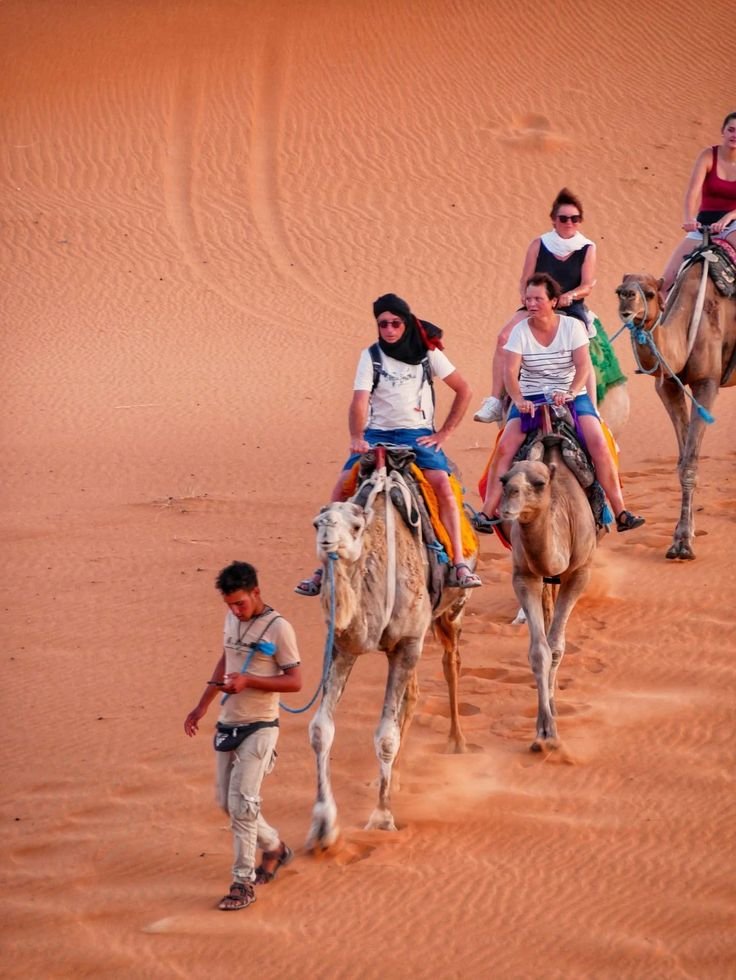
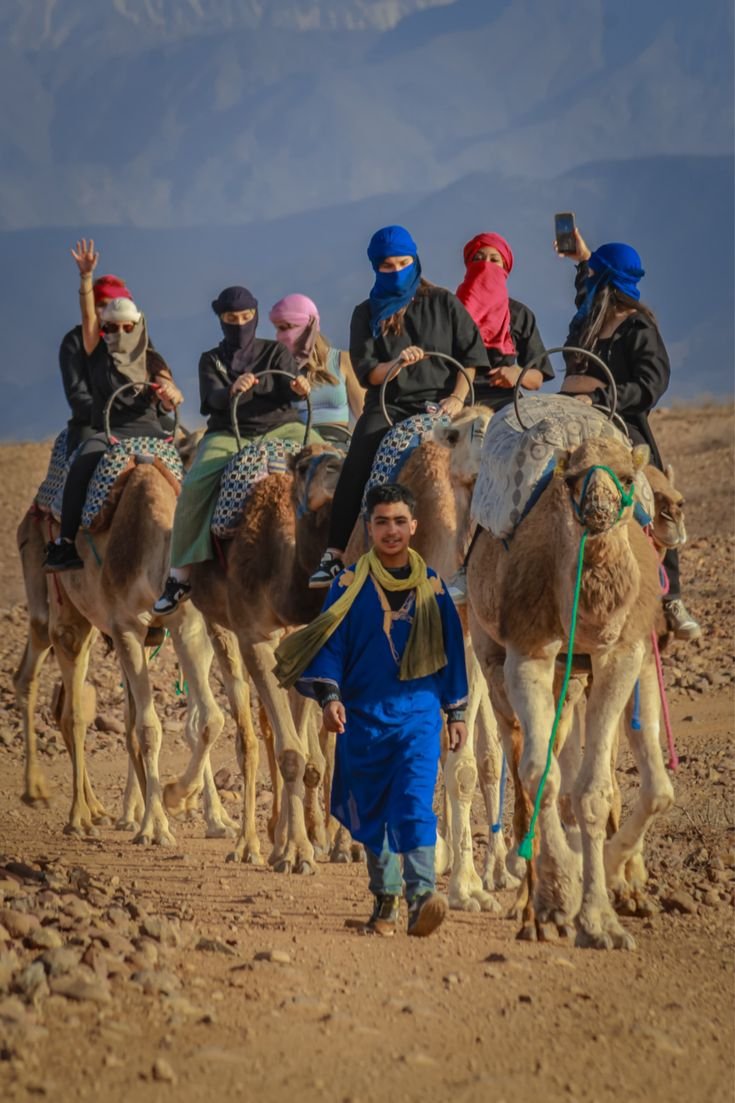
- The Transformation: Upon arrival, the camel handlers (cameliers) will invite you to dress the part. You will don a Gandora (a loose-fitting tunic) and a Shemagh (headscarf) to protect you from the sun. Tip: This is the moment for a great photo!
- The Mount: Camels are tall! The camel will sit on the ground for you to mount. Hold on tight to the saddle handle—when the camel stands up, it is a jerky “back legs first, then front legs” motion. Lean back!
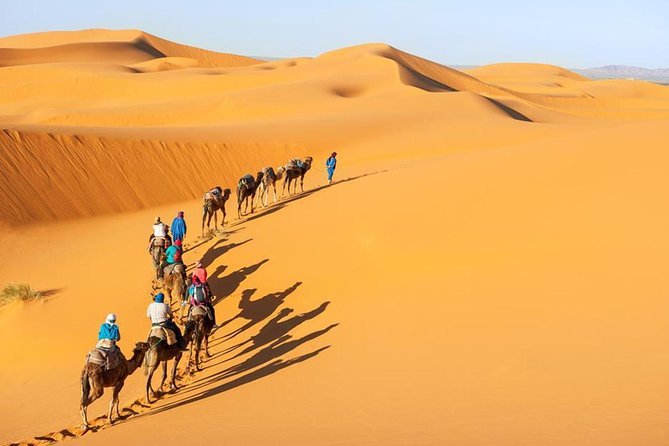
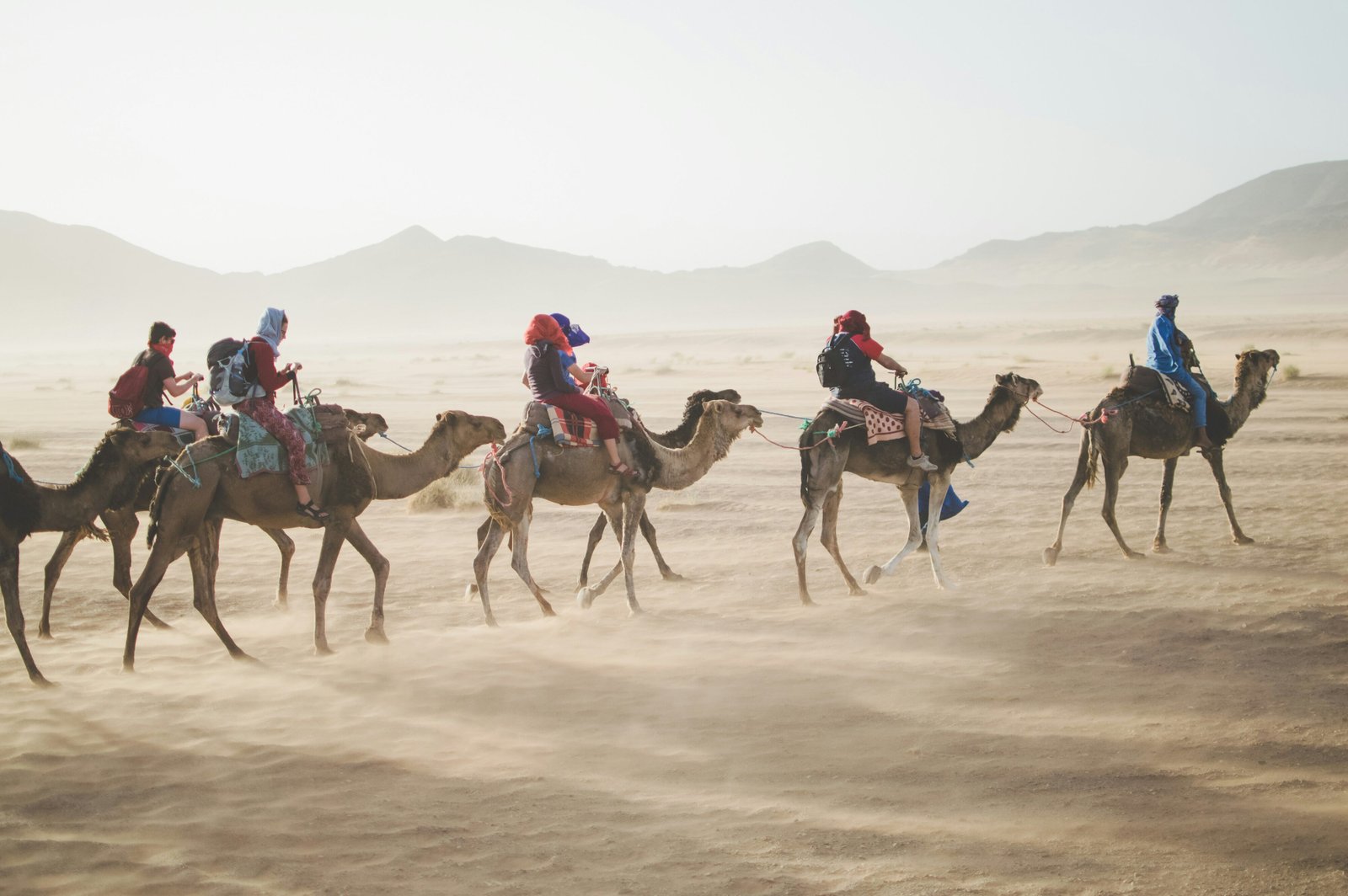
- The Ride: You will trek for roughly 45 minutes to 1 hour. The pace is slow and rhythmic.
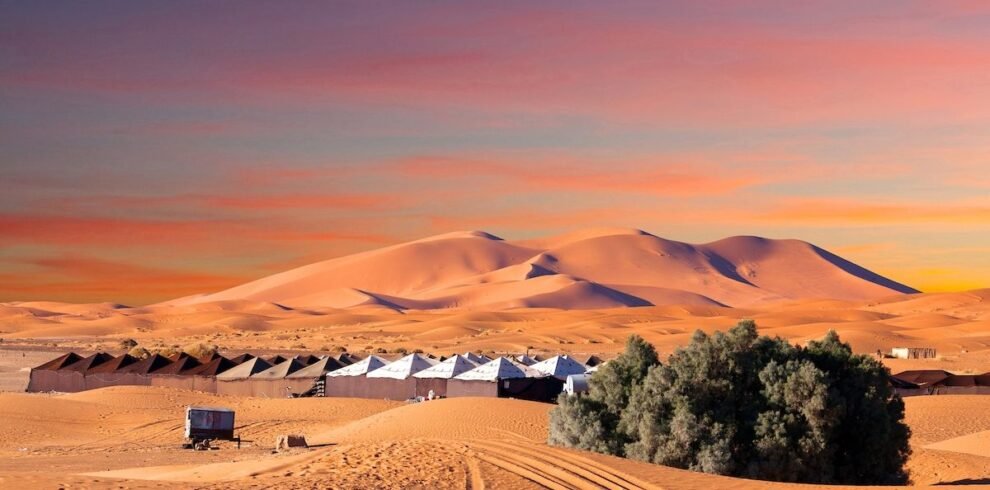
- Tea Time: Moroccan hospitality is legendary. Almost every tour concludes with a glass of sweet mint tea, usually served in a tent or a shaded area.
3. Practical Tips: What to Wear and Bring
A camel ride is fun, but if you are dressed incorrectly, it can be uncomfortable.
- Wear Long Pants: Camel hair is coarse and saddles can be rough. Wearing shorts can lead to itchy, chafed legs. Jeans or loose cotton trousers are the best choice.
- Closed-Toe Shoes: You will be walking on sand or rocky dirt. Sandals or flip-flops often slip off when you mount the animal. Sneakers are safer.
- No Short Skirts: Ladies, you will be straddling a wide animal. Short skirts are not practical. If you want to wear a dress for photos, wear leggings underneath.
- Sun Protection: Even in winter, the Moroccan sun is strong. Sunglasses are mandatory.
4. Animal Welfare: How to Choose a Trustworthy Operator
For many modern travelers, the “best” ride is an ethical one. Camels are tough animals, but they deserve respect. When booking or arriving, look for these signs of a good operator:
- The Condition of the Animal: A healthy camel has a hump that stands upright (a flopped hump can indicate malnutrition). They should not have open sores where the saddle sits.
- The Behavior: Camels can be grumpy, but they shouldn’t be terrified. If the handler is hitting the animal aggressively, ask them to stop or refuse the ride.
- The Load: A dromedary is strong, but responsible operators usually limit riders to one adult per camel (or one adult and one small child). Two heavy adults on one camel is generally frowned upon.
At our agency, we strictly partner with handlers who treat their animals as part of the family, ensuring regular rest, water, and veterinary care.
5. Pricing: What Does It Cost?
Prices vary depending on whether you book a private transfer or a shared group.
- Palmeraie (Shared): Expect to pay between €20 and €35 per person. This usually includes pickup, the ride, and tea.
- Agafay (Sunset): Because of the longer distance and the premium location, expect to pay between €40 and €70 per person. This often includes a more substantial snack or dinner.
Final Thoughts: Is It Worth It?
Some travel snobs might call the Marrakech camel ride “touristy.” And yes, it is.
But there is a reason it is popular. There is something timeless about the swaying rhythm of the camel, the warm breeze, and the view of the Atlas Mountains on the horizon. It forces you to slow down. It connects you to the history of the caravans that used to cross the Sahara to reach this very city.
Whether you choose the quick fun of the Palmeraie or the dramatic sunset of Agafay, it is a memory that will stick with you long after you leave Morocco.
Ready to saddle up?
Browse our Marrakech Activities Page to book your sunset camel trek in the Agafay Desert or the Palmeraie today.