By [marrakech-history] Editorial Team
Last Updated: December 2025
Marrakech is not just a destination; it is an immersion. It is a city where the scent of burnt amber and orange blossom hangs heavy in the air, where donkey carts jostle with scooters in narrow alleyways, and where the call to prayer echoes off ancient ochre walls.
For the first-time traveler, Marrakech can be a dizzying, sensory overload. It is chaotic, charismatic, and utterly captivating.
Whether you are planning a trip for late 2025 or looking ahead to 2026, this guide cuts through the noise. From navigating the labyrinthine souks to finding the perfect tagine, here is everything you need to see, do, and eat in Morocco’s most iconic city.
1. Know Before You Go: Marrakech Essentials
Before you dive into the Medina, here are the logistics you need to master.
- The Best Time to Visit:
Spring (March to May) and Autumn (September to November) offer the best weather, with sunny days and cool evenings.- Winter Travel Note: If you are visiting in December or January, be packed for contrast. The days are sunny and pleasant (20°C/68°F), but nights can drop near freezing. Most traditional Riads do not have central heating, so bring warm layers.
- Getting Around:
Within the Medina (Old City), walking is your only option. For longer distances, use Petit Taxis (small beige cars).- Pro Tip: Always insist the driver turns on the meter (“le compteur”). If they refuse, find another taxi.
- Currency & Cash:
While upscale restaurants and hotels accept cards, cash (Moroccan Dirham – MAD) is king in the souks. Keep small bills handy for tips and street food.
2. What to See: The Architectural Icons
Marrakech is a historian’s dream. If you only have time for the highlights, prioritize these four sites.
Jemaa el-Fnaa: The Heartbeat of the City
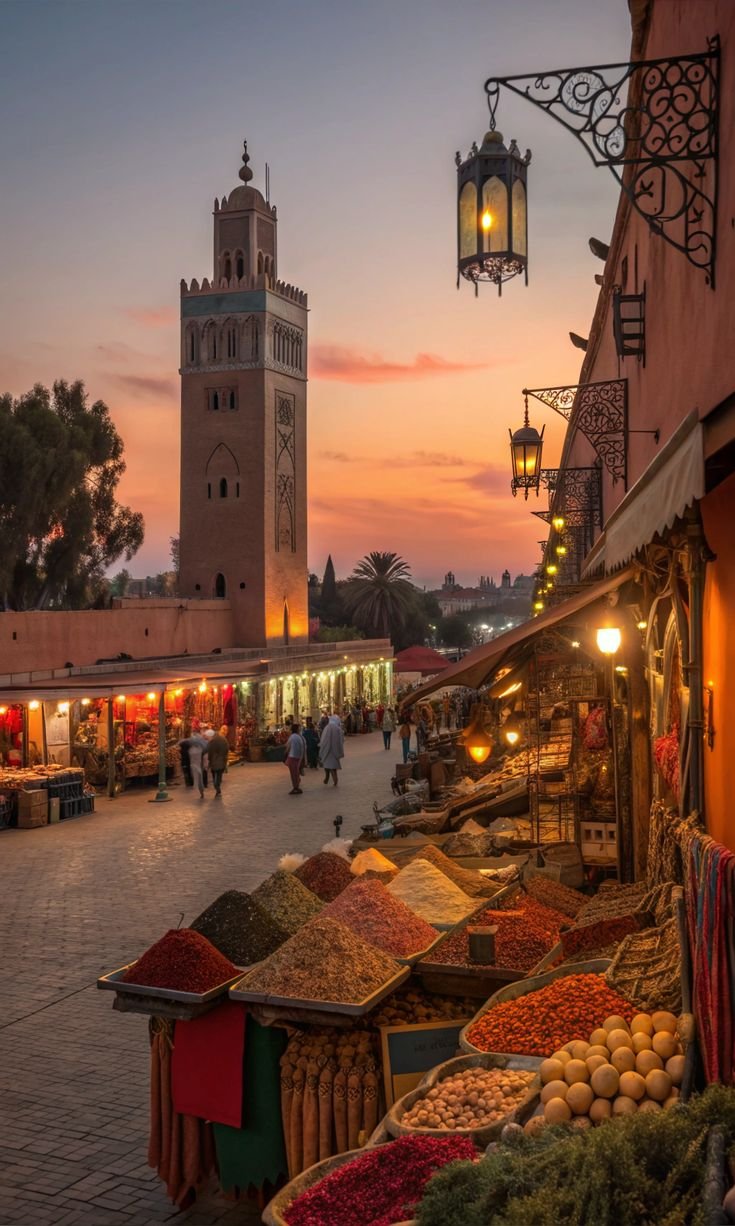
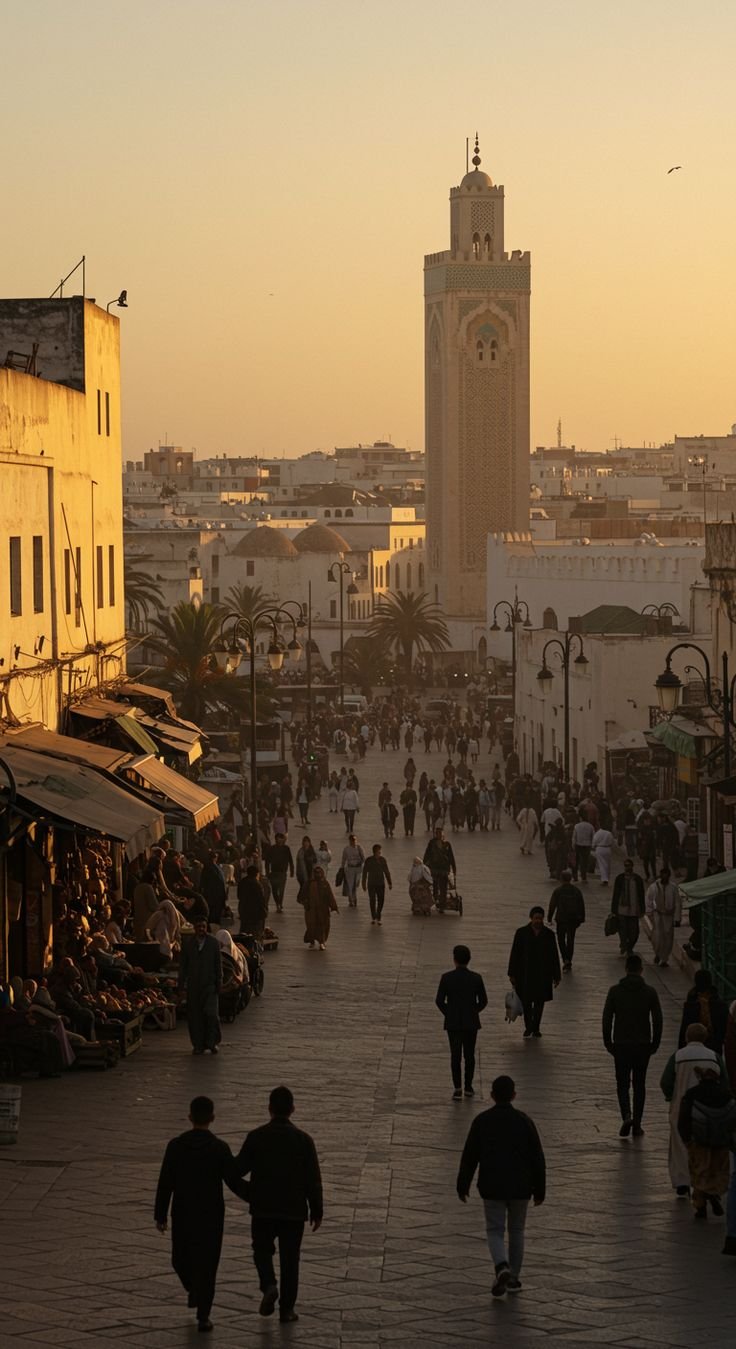
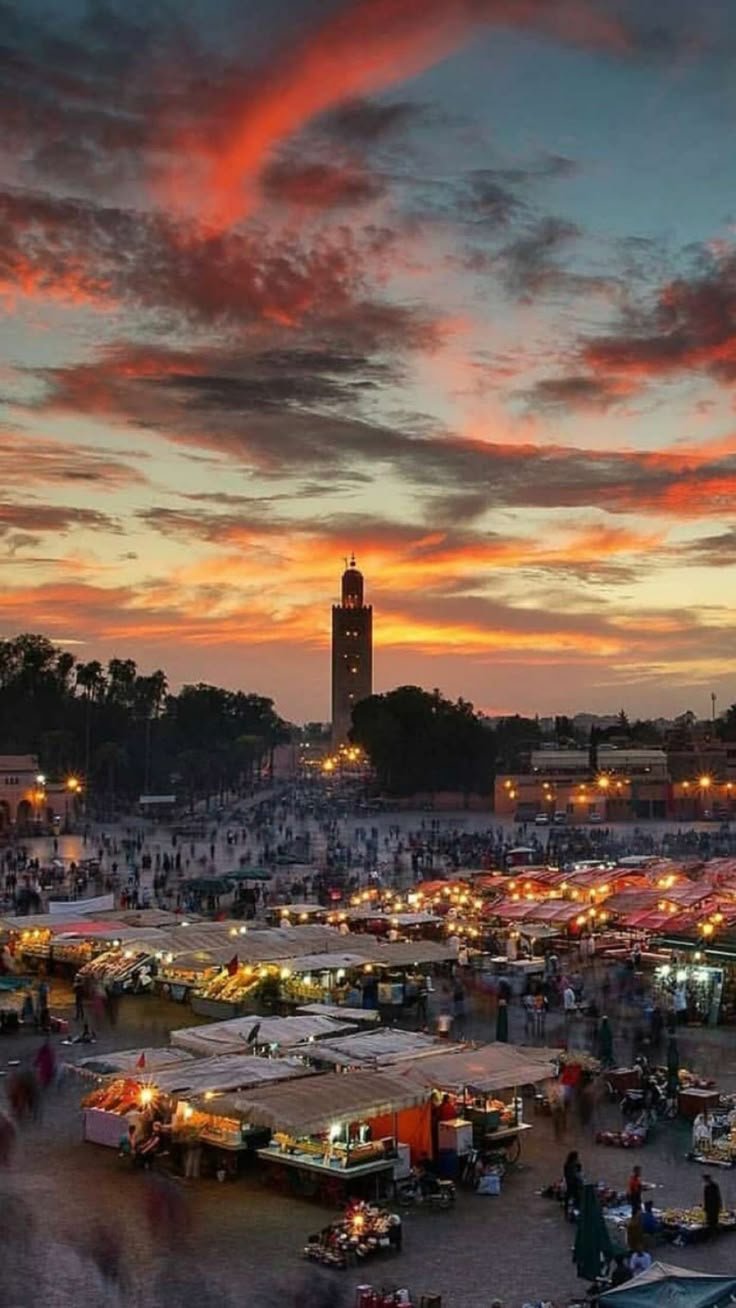
By day, this vast square is a sober market of orange juice vendors and snake charmers. At sunset, it transforms into the world’s most raucous open-air theater. Smoke rises from hundreds of food stalls, musicians play Gnawa beats, and storytellers gather crowds. It is UNESCO-recognized and absolutely unmissable.
- Best View: Head to the rooftop terrace of Café de France or Le Grand Balcon du Café Glacier an hour before sunset to watch the square transform from above.
Jardin Majorelle & The YSL Museum
A shock of electric blue in a city of earth tones, this garden was created by French painter Jacques Majorelle and saved by Yves Saint Laurent. It is a botanical masterpiece featuring cacti from around the world.
- Important 2025 Tip: You cannot buy tickets at the door anymore. You must book your time slot online at least 24 hours in advance. They strictly enforce this rule.
Ben Youssef Madrasa
Recently reopened after years of restoration, this is the finest example of Islamic architecture in Marrakech. Founded in the 14th century, it was once the largest Islamic college in North Africa. The intricate zellige tilework, carved cedar wood, and serene central courtyard are breathtaking.
Bahia Palace
“Bahia” means “brilliance,” and this 19th-century palace lives up to the name. It is a sprawling complex of 150 rooms, showcasing floor-to-ceiling Moroccan craftsmanship. The Grand Courtyard, with its vast marble floor, is a photographer’s dream.
3. What to Do: unforgettable Experiences
Sightseeing is one thing; experiencing Marrakech is another.
Get Lost in the Souks
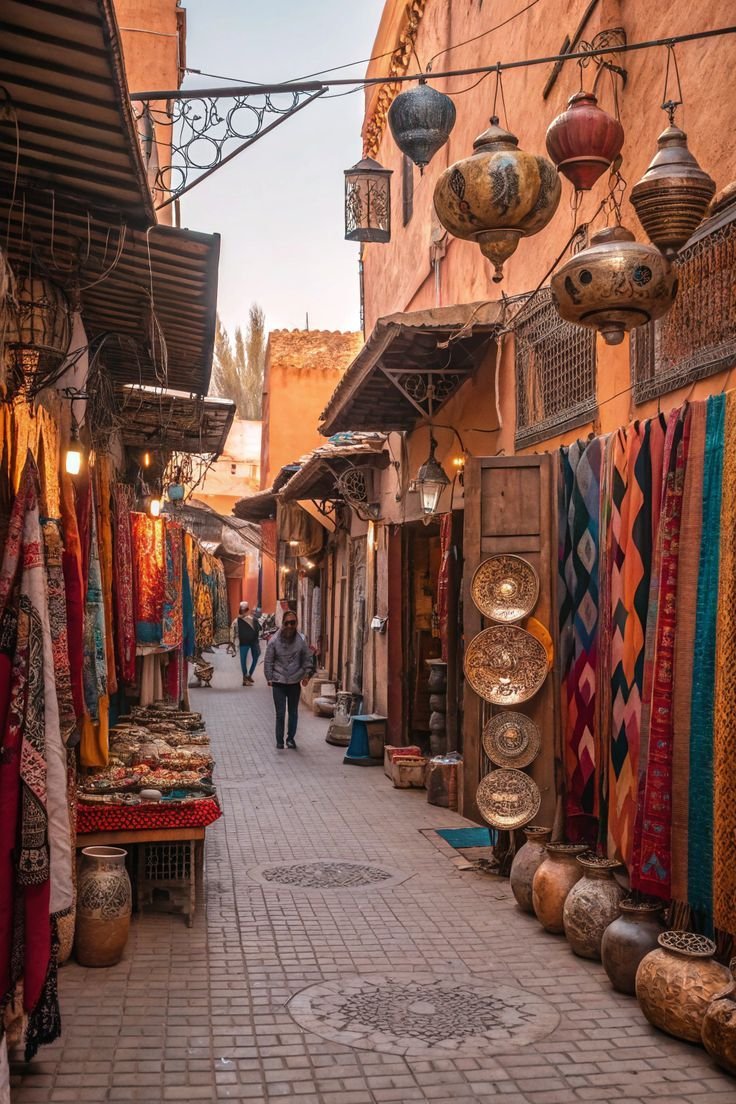
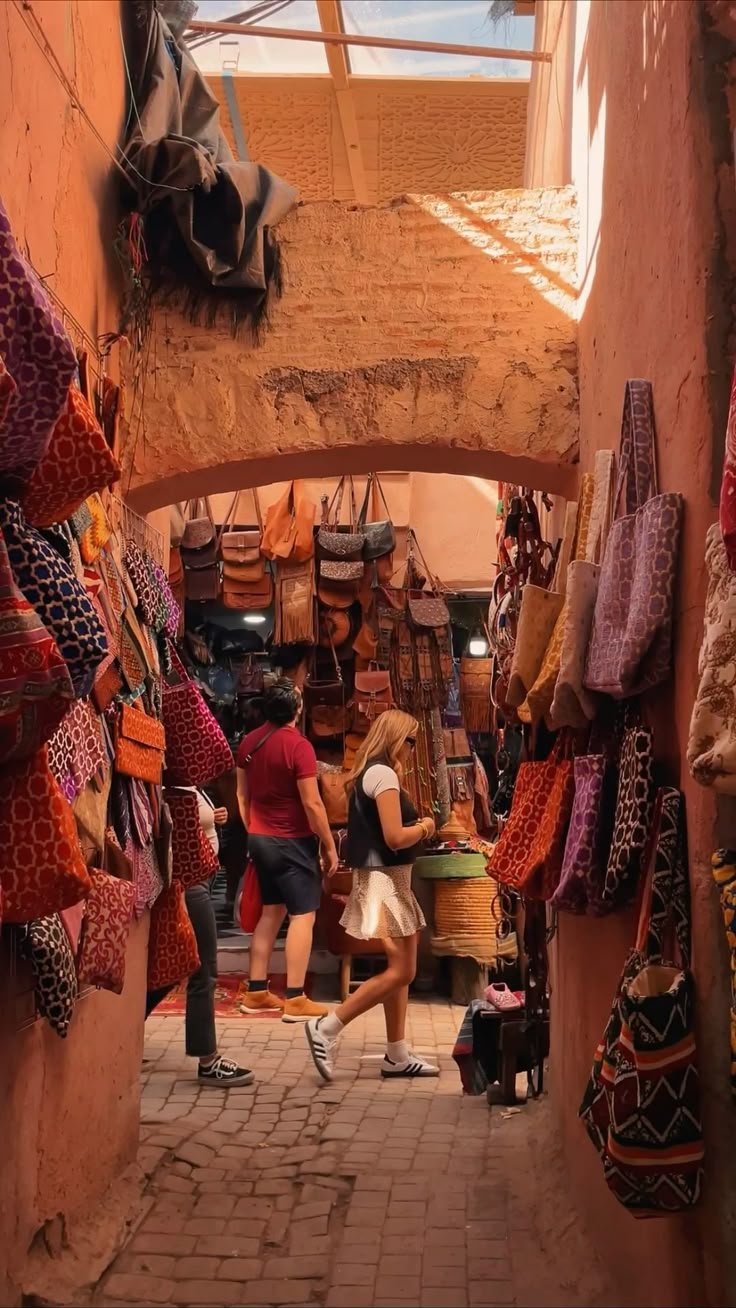
The Medina is a maze of over 3,000 winding alleyways.
- Souk Semmarine: The main artery, selling everything from rugs to kaftans.
- Souk Haddadine: The blacksmiths’ quarter—noisy, rhythmic, and fascinating.
- The Strategy: Don’t look at your map. Get lost intentionally. When you are ready to leave, simply ask a shopkeeper for “Jemaa el-Fnaa,” and they will point you back to the center.
Scrub Down in a Traditional Hammam
The Hammam is a weekly ritual for locals. It involves steaming, an exfoliating scrub with black soap (sabon beldi) and a kessa glove, and a clay mask.
- For Beginners: Try a private hammam at a spa (like Les Bains de Marrakech or Hammam de la Rose) for a gentle introduction.
- For the Brave: Visit a local neighborhood hammam for the authentic, no-frills experience (bring your own soap and towel!).
Take a Vintage Sidecar Tour
For a different perspective, book a tour with Marrakech Insiders. You zip through the Medina and the Palm Grove in a vintage Ural sidecar. It’s arguably the coolest way to see the city and access areas cars can’t reach.
4. What to Eat: A Gastronomic Journey
Moroccan cuisine is world-famous, but the best food isn’t always in the fanciest restaurants.
Must-Try Dishes
- Tagine: Slow-cooked stew named after the clay pot it’s cooked in. Try Lamb with Prunes or Chicken with Preserved Lemon.
- Tanjia (The Marrakech Specialty): Not to be confused with Tagine. Tanjia is a bachelor’s dish of beef, garlic, cumin, and preserved lemon, slow-cooked in a clay urn in the ashes of a hammam furnace.
- Pastilla: A savory-sweet pie made of flaky pastry, stuffed with pigeon or chicken, almonds, and dusted with cinnamon and powdered sugar.
- Msemmen: Flaky, square pancakes served with honey for breakfast.
Top Dining Recommendations
- Street Food: Stall #14 in Jemaa el-Fnaa is famous for its fried fish and calamari.
- Lunch: Nomad (in the spice souk) offers “Modern Moroccan” food with one of the best rooftop views in the city.
- Dinner: Dar Yacout or Al Fassia for a high-end, traditional gastronomic experience run entirely by women.
5. Where to Stay: Riad vs. Hotel
If it is your first time, stay in a Riad.
Riads are traditional Moroccan houses with an interior garden or courtyard. From the outside, they look like plain walls; inside, they are architectural sanctuaries.
- Why: You get personalized service, stunning decor, and a quiet escape from the Medina noise.
- Location: Look for Riads in the Mouassine or Dar El Bacha neighborhoods—they are central but slightly safer and cleaner than the deep southern parts of the Medina.
6. Safety & Etiquette for First-Timers
- Dress Code: Marrakech is cosmopolitan, but modesty is respected. For women, carrying a lightweight scarf to cover shoulders in conservative areas is a good gesture. Men should avoid sleeveless shirts in the city.
- Dealing with “Hassling”: You will be approached by shopkeepers and unofficial guides. A firm but polite hand over your heart and a smile, saying “La, shukran” (No, thank you), works wonders.
- The Art of Haggling: In the souks, there are no price tags. Bargaining is expected. Start by offering 30-40% of the initial price and meet in the middle. Keep it lighthearted—it’s a social interaction, not a battle!
Final Thoughts
Marrakech is a city that rewards curiosity. It requires a little patience and a sense of humor, but in return, it gives you memories that vibrate with color and life.
Ready to plan your Moroccan escape?
Check out our [Classic Imperial Cities Tour] or browse our [Hand-Picked Riad Collection] to book your stay today.