Choosing the best time for a camel ride in Marrakech is often the hardest decision travelers face when planning their Moroccan itinerary.
It seems like a simple choice. Do you want the soft, misty light of the morning, or the fiery drama of the setting sun?
However, the reality of the Red City is a bit more complex. Factors like the searing afternoon heat, the tour bus crowds, and the specific location of your ride—whether in the Palm Grove (Palmeraie) or the Agafay Desert—play a massive role in your enjoyment.
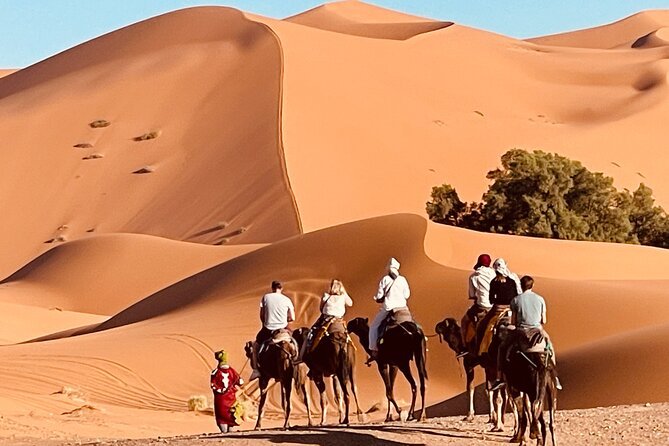
Riding a dromedary (the one-humped camel native to Morocco) is a bucket-list experience. You don’t want to ruin it by shivering in the pre-dawn cold or sweating through your linen shirt in the late afternoon.
This guide breaks down the pros, cons, and secrets of both timing options to help you decide exactly when to saddle up.
Best Time for a Camel Ride in Marrakech: The “Golden Hour” Favorite
Let’s be honest: when you scroll through Instagram looking at Morocco travel inspiration, 90% of the camel photos you see are taken at sunset.
The sunset ride is the industry standard. It is the most popular option offered by tour operators, and for good reason. But popularity comes with a price.
The Pros: Atmosphere and Romance
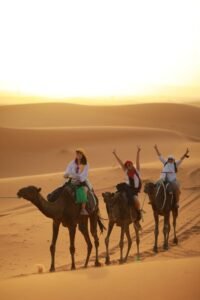
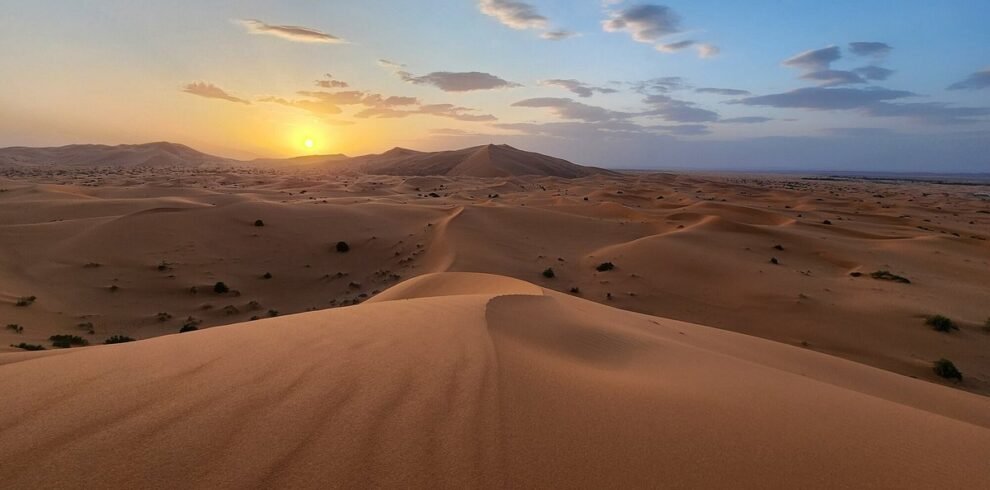
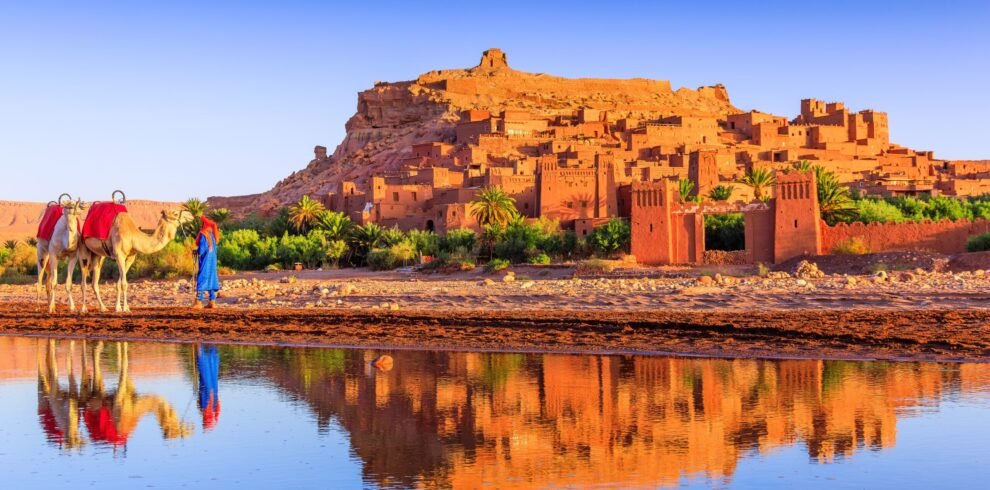
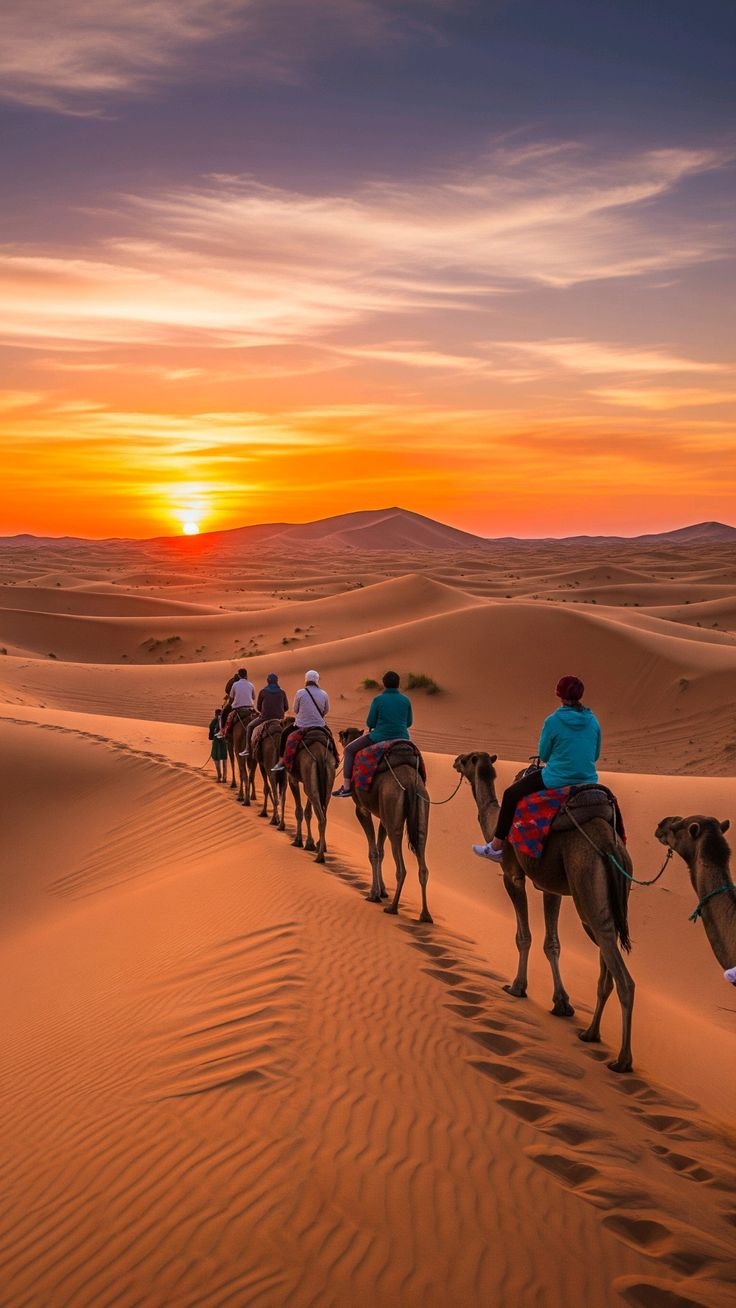
The primary reason travelers choose the evening slot is the light. As the sun dips lower toward the horizon, the harsh Moroccan glare softens into a warm, honey-colored glow.
If you are heading to the Agafay Desert (the stone desert 45 minutes from the city), the sunset is spectacular. The Atlas Mountains often turn a shade of purple, and the rolling rocky dunes catch the light in a way that feels cinematic.
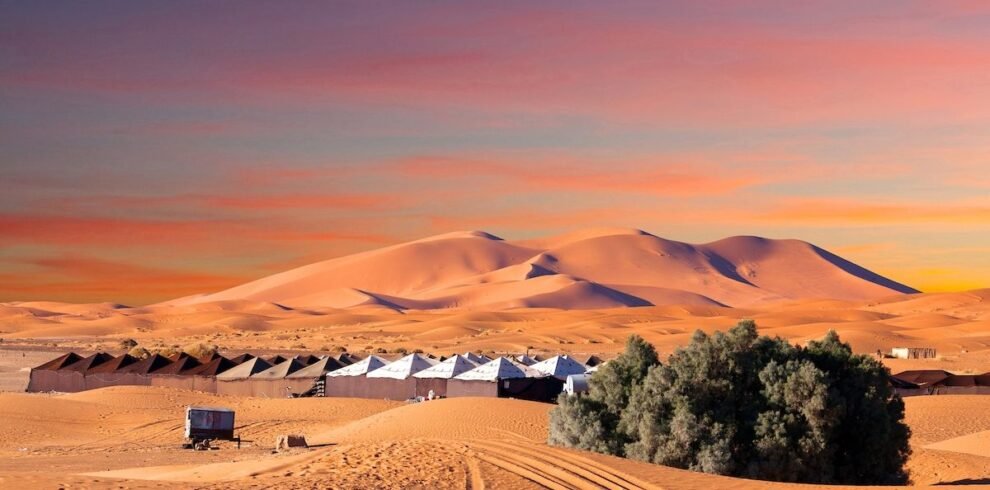
This is the “Lawrence of Arabia” moment. The shadows stretch long across the ground, and the sky transforms into a gradient of burnt orange, pink, and indigo. For couples, this is undeniably the most romantic choice.
The Cons: Crowds and Clutter
Because the sunset ride is the “famous” one, you will not be alone.
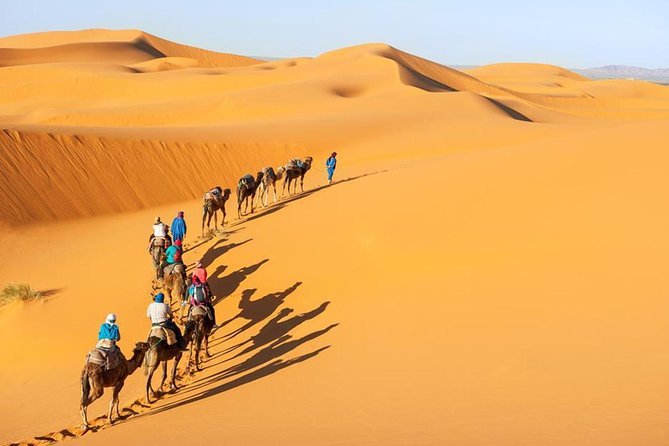
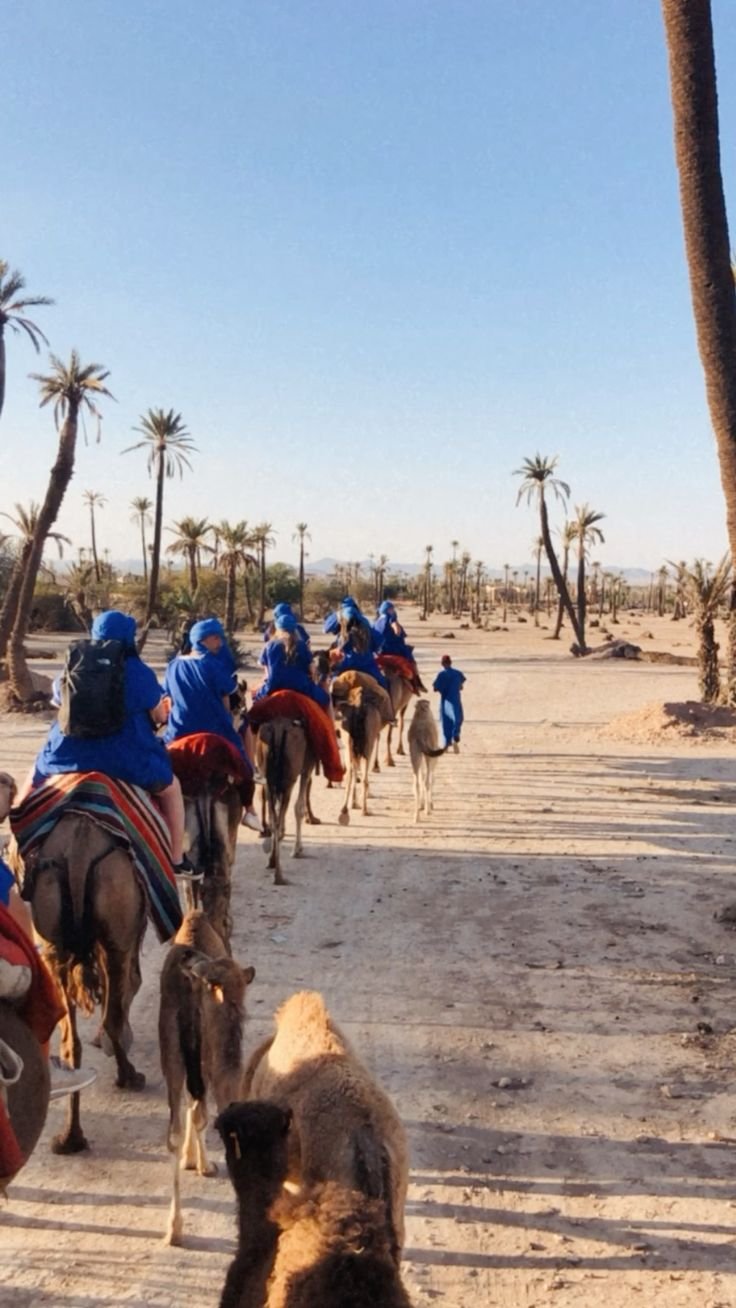
In the Marrakech Palmeraie, the sunset slot is peak hour. You may find yourself part of a long caravan of camels, sometimes numbering in the dozens.
If you are looking for profound silence and isolation, a standard sunset tour in the Palm Grove might feel a bit like a tourist conveyor belt. You have to be strategic with your camera angles to avoid getting other tourists in your shot.
The Temperature Factor
In the cooler months (October to April), a sunset ride is perfectly pleasant. The day’s heat is fading, but the biting cold of the desert night hasn’t set in yet.
However, in the peak of summer (July and August), 6:00 PM or 7:00 PM can still be scorching hot. The ground retains the heat of the day, radiating it back up at you.
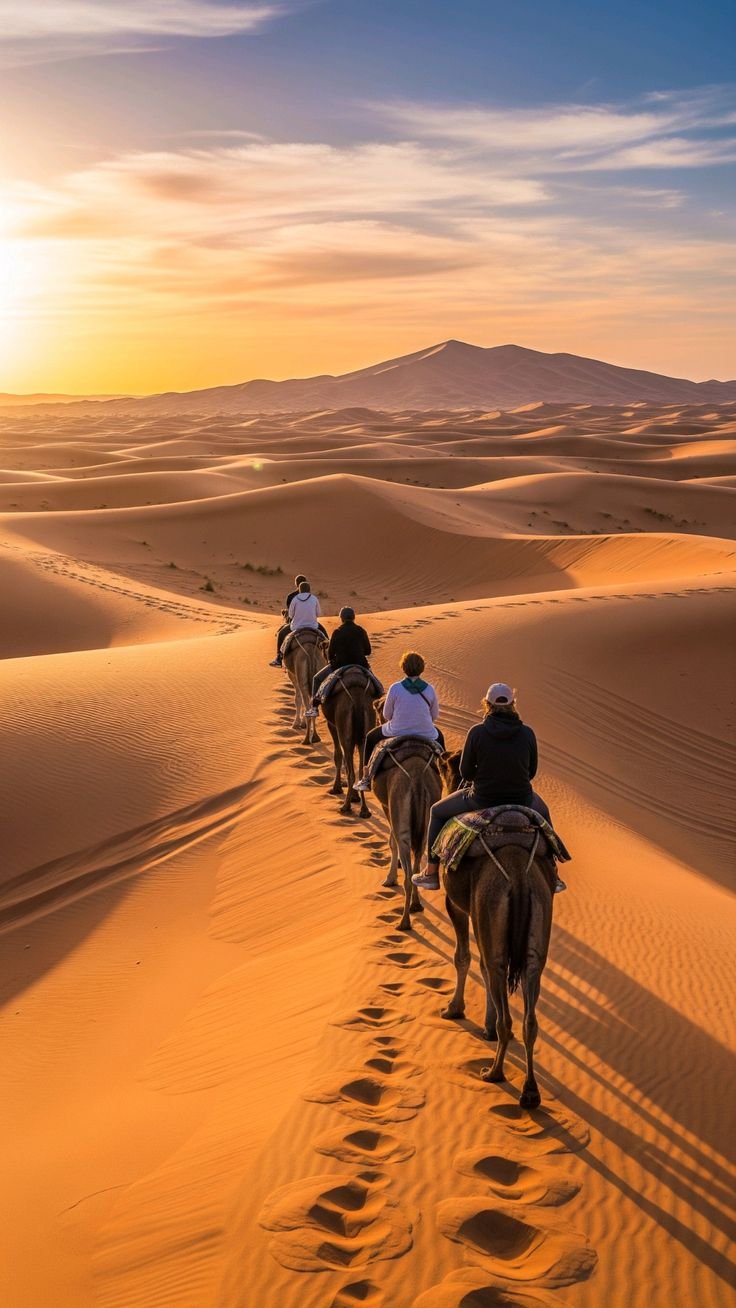
The Morning Camel Ride: The Zen Alternative
While the masses flock to the dunes in the evening, the morning ride remains the secret of the savvy traveler.
Asking for a sunrise or early morning slot often surprises tour operators, but those who do it rarely regret it.
The Pros: Serenity and Nature
The best time for a camel ride in Marrakech if you value silence is undoubtedly the morning.
Marrakech is a loud city. The morning ride offers a rare escape from the chaos. In the Palmeraie, the air is often still and crisp. You can hear the birds singing in the palm trees and the soft thud of the camel’s hooves on the dirt paths.
The light is different in the morning. It isn’t the dramatic orange of sunset; it is a soft, blue-white light. There is often a light haze or mist clinging to the ground before the sun burns it off, giving the landscape a dreamlike, ethereal quality.
Plus, you will likely have the trail to yourself. It feels like a private expedition rather than a group tour.
The Cons: The Early Wake-Up Call
To catch the true sunrise, you need to be up early—very early.
If you are staying in the Medina, you might need to leave your Riad by 5:30 AM or 6:00 AM, depending on the season. For travelers who view vacation as a time to sleep in, this is a dealbreaker.
Furthermore, once the sun is fully up (around 10:00 AM), the light becomes harsh and “flat” very quickly. If you overshoot the sunrise window and start too late, your photos might look washed out compared to the evening variety.
Seasonal Strategy : Winter vs. Summer
You cannot choose the best time for a camel ride in Marrakech without looking at the calendar. Morocco has extreme seasons, and the weather dictates the experience.
Summer (June – August)
Winner: The Morning Ride.
In summer, Marrakech is an oven. Temperatures often hit 45°C (113°F).
By the time sunset rolls around, the earth has been baking for 12 hours. It is still hot. The morning, however, is the coolest part of the day. The ground is cool from the night, and the air is fresh.
If you are visiting in July, book the earliest slot possible. Your body will thank you.
Winter (December – February)
Winner: The Sunset Ride.
Desert mornings in winter are freezing. We aren’t talking “chilly”; we mean seeing-your-breath cold.
If you book a sunrise ride in January, you need a heavy coat, gloves, and a scarf. You will spend the first 30 minutes shivering until the sun hits you.
Conversely, the sunset ride in winter is delightful. You get the warmth of the late afternoon sun, and you finish the ride just as the temperature starts to drop.
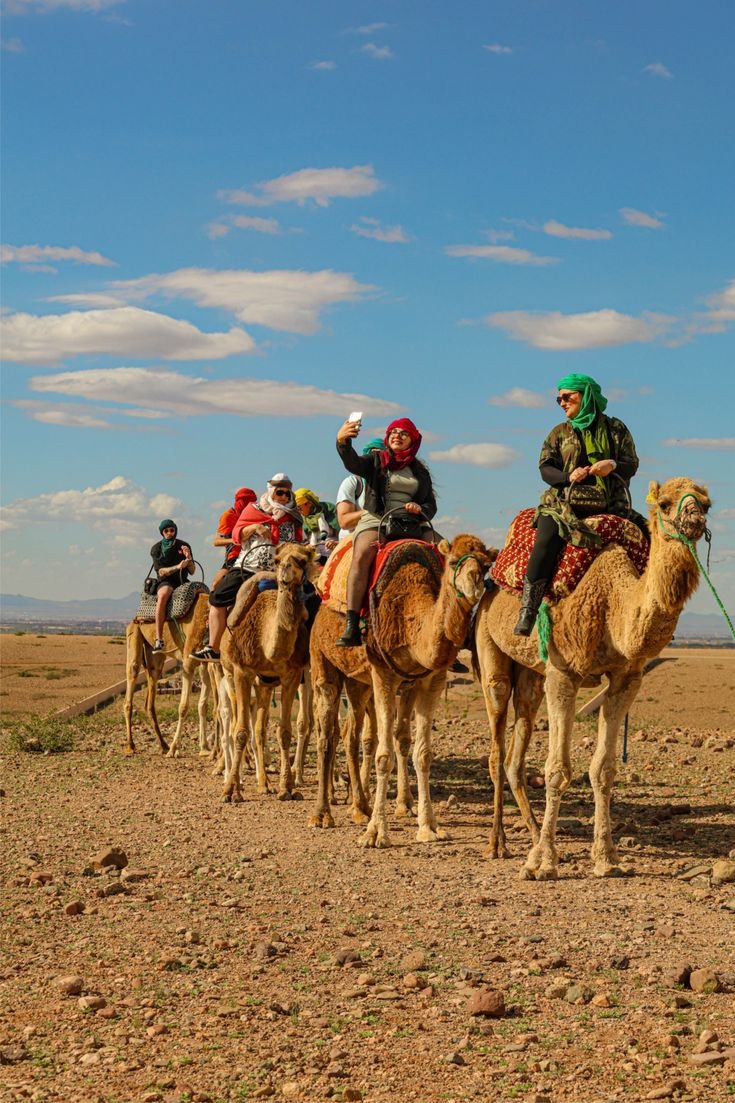
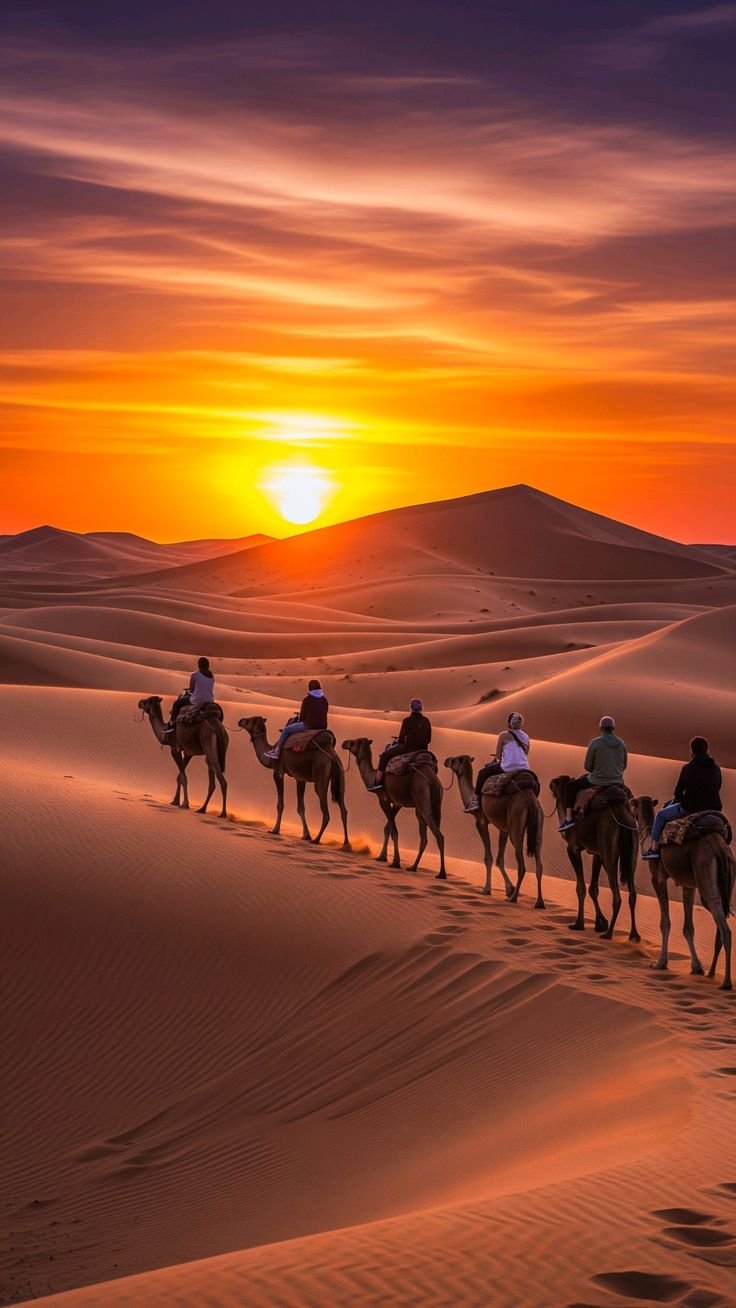
The Photography Battle: Blue Hour vs. Golden Hour
If your main goal is capturing National Geographic-level photos, the lighting conditions are the deciding factor.
Sunset: The Silhouette Shot
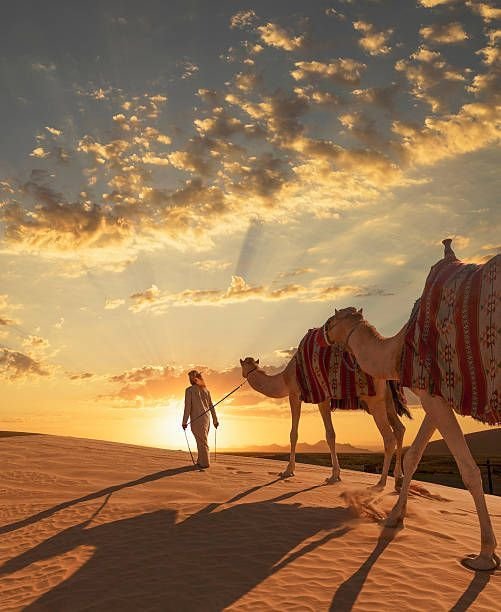
Sunset provides the “Golden Hour.” This is technically the hour before the sun vanishes. The light is directional, creating texture in the sand (or rocks in Agafay) and making colors pop.
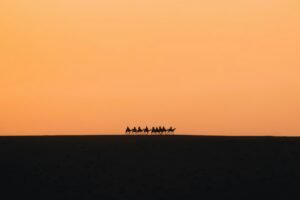
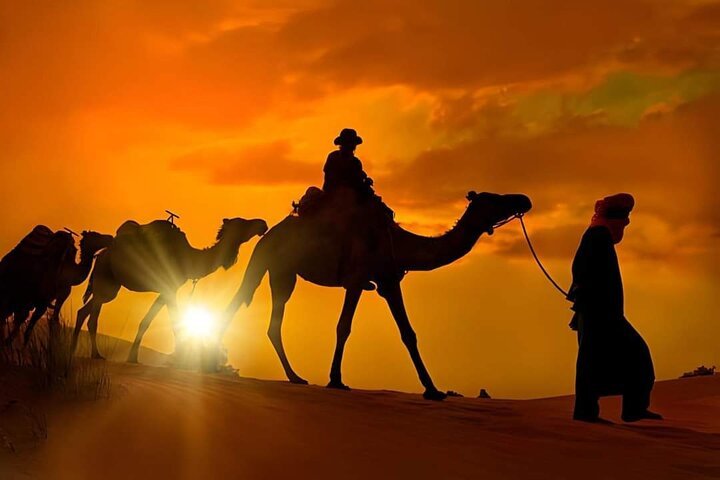
This is the only time you can get the classic “Camel Silhouette” shot, where the animal is a black shape against a fiery sky.
Morning: The Soft Portrait
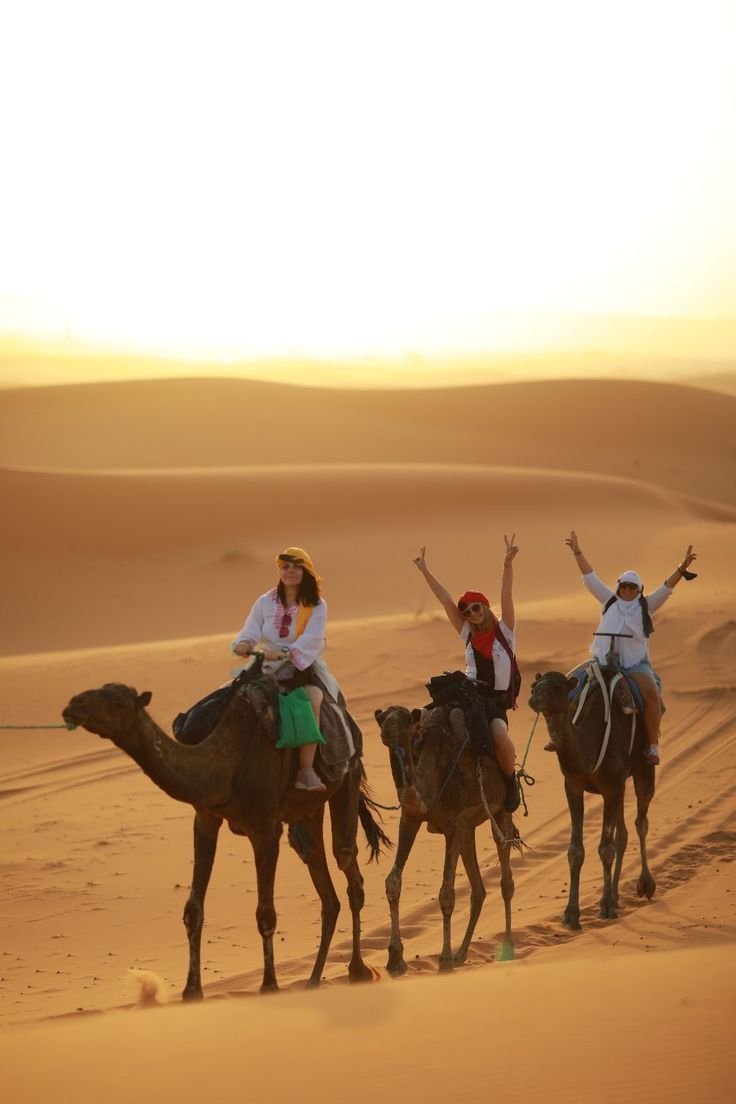
Morning light is omnidirectional and soft before the sun breaks the horizon. This is actually better for portraits of you on the camel.
Sunset light can cast harsh shadows on faces (raccoon eyes), whereas the soft morning glow smooths out skin tones. If you want a great selfie, morning might actually be your winner.
Comparison Summary
Here is a quick breakdown to help you visualize the trade-offs.
| Feature | Morning / Sunrise | Sunset / Golden Hour |
| Crowd Level | Very Low (Private Feel) | High (Busy) |
| Temperature | Cool / Cold (Needs layers) | Warm / Hot (Cooling down) |
| Lighting | Soft, Blue, Misty | Golden, Dramatic, High Contrast |
| Wake Up Time | Very Early (5:30 AM – 7:00 AM) | Relaxed (4:00 PM – 5:00 PM) |
| Best Season | Summer (To beat the heat) | Winter (To stay warm) |
| Vibe | Zen, Peaceful, Nature-focused | Romantic, Cinematic, energetic |
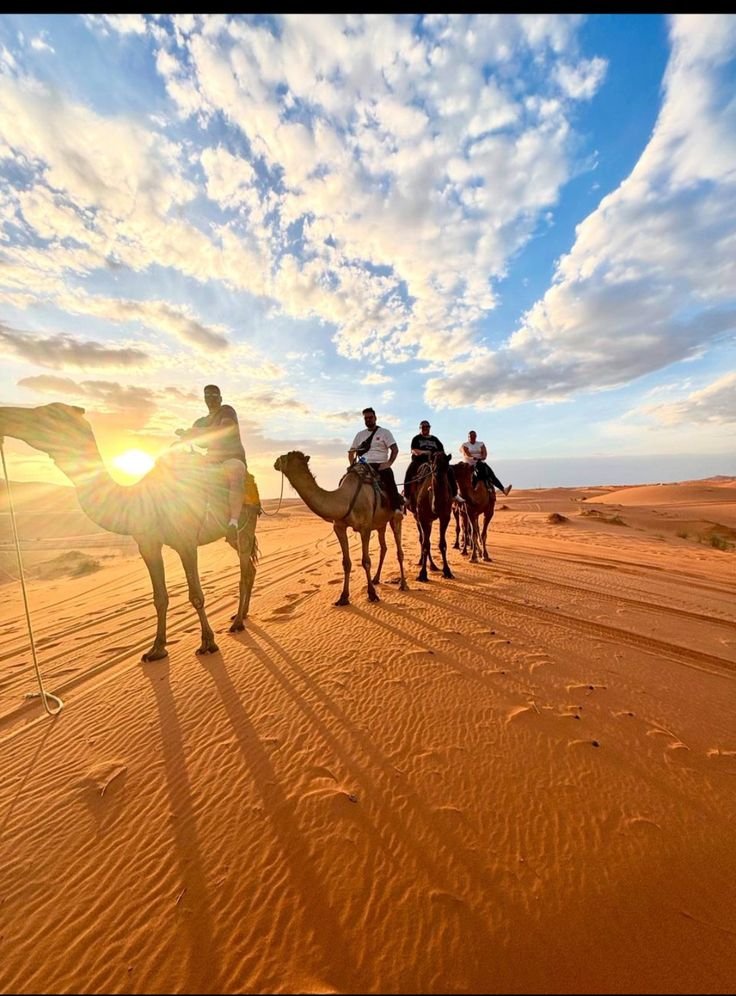
Location Matters: Palmeraie vs. Agafay
The location of your ride also influences the timing.
The Palmeraie (Palm Grove):
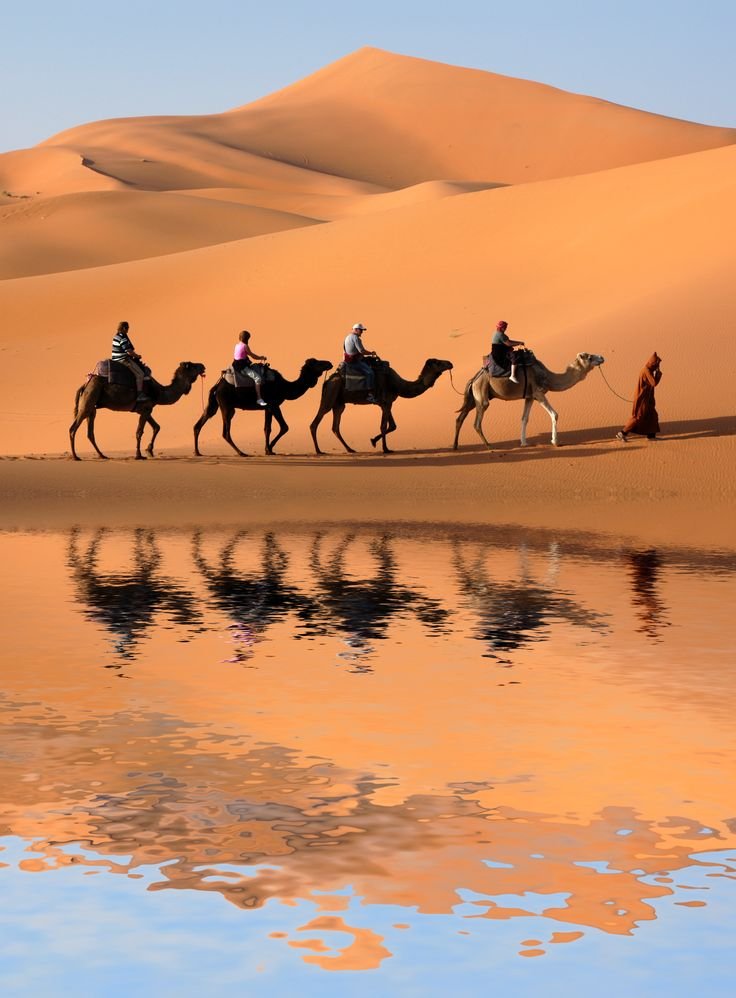
This is close to the city (20 minutes). It is a flat oasis with thousands of palm trees.
- Verdict: Good for both, but Morning is magical here because of the mist through the trees.
The Agafay Desert:
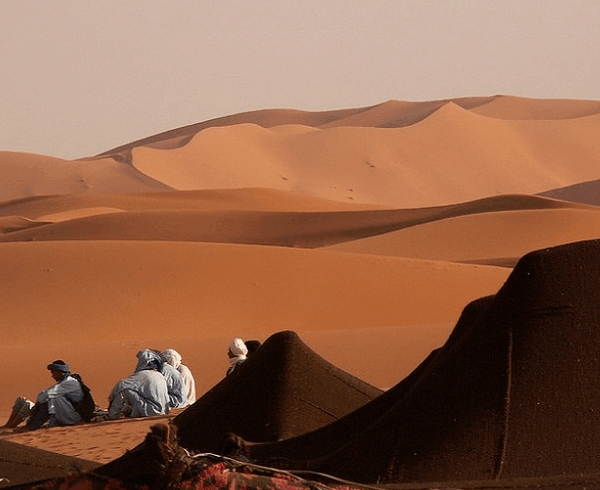
This is further out (45-60 minutes). It is an open, rocky expanse with views of the High Atlas Mountains.
- Verdict: Sunset is the clear winner here. The way the sun hits the mountains and the vast open horizon is designed for evening viewing. Morning can feel a bit desolate and gray in the stone desert.
Practical Tips for the Perfect Ride
No matter which time you choose, a few practical preparations will ensure your ride is comfortable.
1. Dress Code is Key
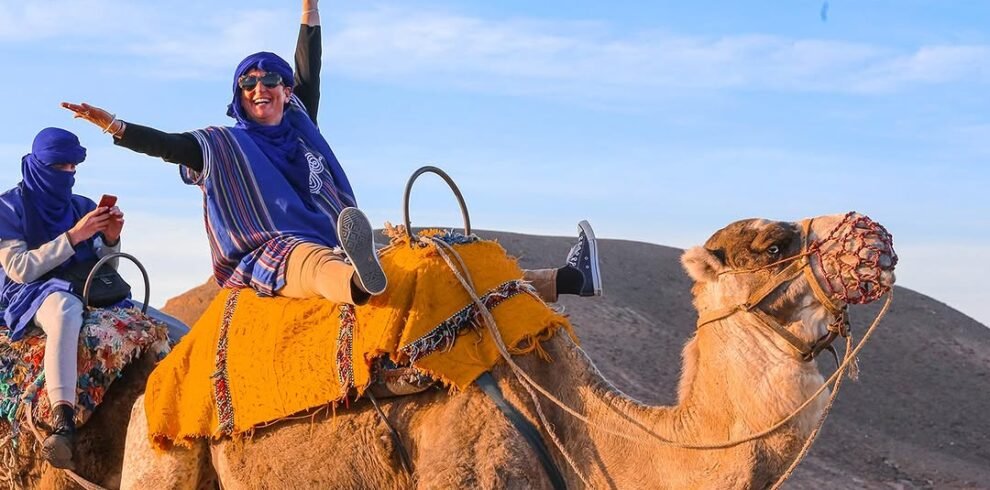
You need long trousers. Camel hair is coarse, itchy, and smells. Wearing shorts is a rookie mistake that will leave your legs chafed.
- Morning: Layer up. A hoodie or fleece that you can take off as the sun rises.
- Sunset: Loose, breathable cotton. Bring a light scarf for when the sun goes down.
2. The “Cheich” (Turban)
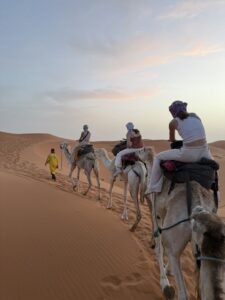
Most tour operators will offer to wrap a traditional Tuareg scarf (Cheich) around your head. Say yes! It protects you from the sun and wind, and frankly, it looks great in photos.
3. Sunglasses are Mandatory
Whether the sun is rising or setting, the glare in Morocco is intense. The reflection off the sand and light-colored rocks can be blinding.
4. Motion Sickness
Camels don’t walk like horses. They have a rolling, swaying gait that can make some people seasick. If you are prone to motion sickness, don’t ride on an empty stomach (morning) or a completely full one (evening).
The Final Verdict
So, what is the best time for a camel ride in Marrakech?
If you are visiting in the summer or seeking a moment of quiet meditation away from the madness of the Medina, book the Morning ride. The coolness and the birdsong are worth the alarm clock.
If you are visiting in the winter, traveling as a couple, or want those iconic silhouette photos for your social media, book the Sunset ride. Just be prepared to share the experience with others.
Ultimately, both offer a glimpse into a mode of travel that has defined North African history for centuries. Whether under the rising sun or the first stars of the evening, the rhythm of the camel remains the same.
Frequently Asked Questions (FAQs)
1. How long does a typical camel ride last in Marrakech?
Most standard camel rides last between 45 minutes to 1 hour. This is usually enough time. Camels are very wide animals, and your hips/legs will likely be tired after an hour.
2. Is it safe to ride a camel at night?
Tours generally end just after sunset during the “Blue Hour” (twilight). Riding in pitch darkness is rarely done for safety reasons, as camels can trip on uneven ground in the Palmeraie or Agafay.
3. Can children ride camels?
Yes, children can ride. Very small children (under 5) usually ride sitting in front of a parent on the same camel. Older children can have their own camel, which will be tied in a caravan to the guide’s camel for safety.
4. Do I need to book in advance?
For sunset rides, yes. It is the peak time, and the best operators with well-cared-for animals get booked up. Morning rides usually have more availability, but booking 24 hours ahead is always recommended to ensure a driver is arranged.