By [marrakech-history] Editorial Team
Last Updated: December 10, 2025
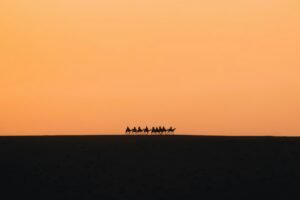
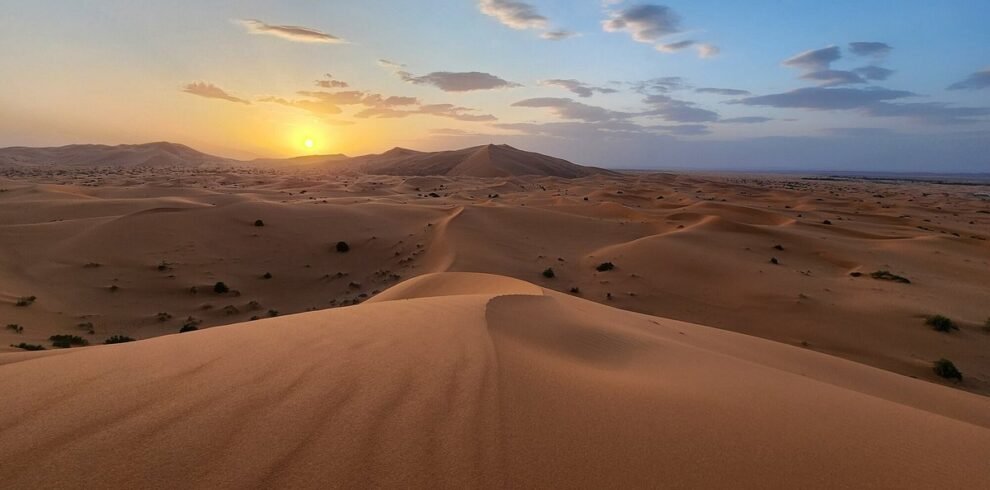
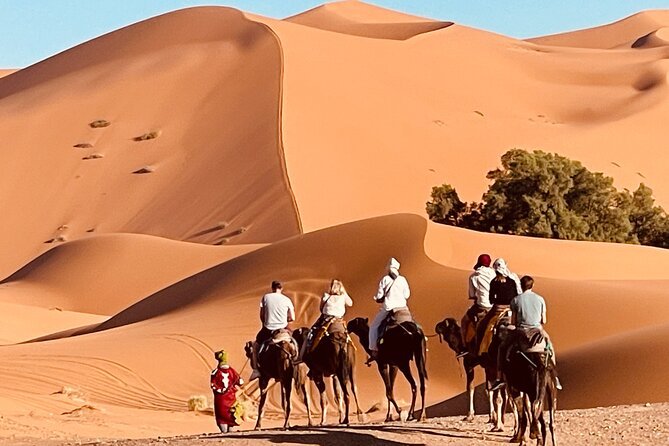
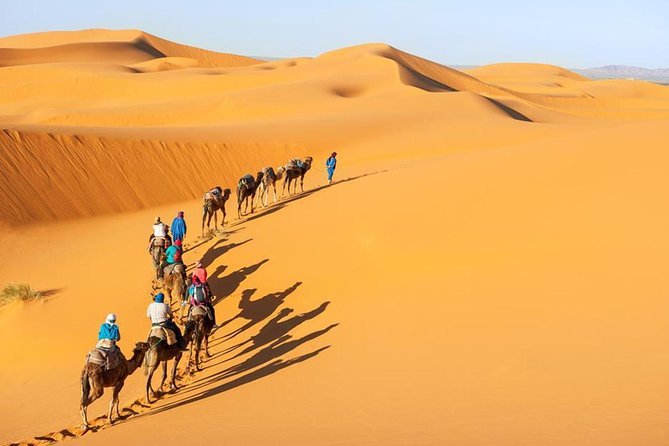
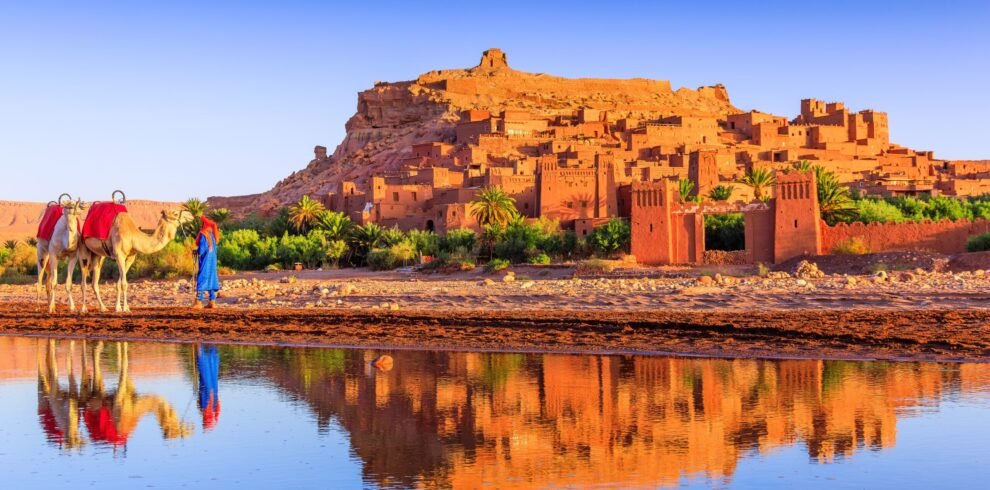
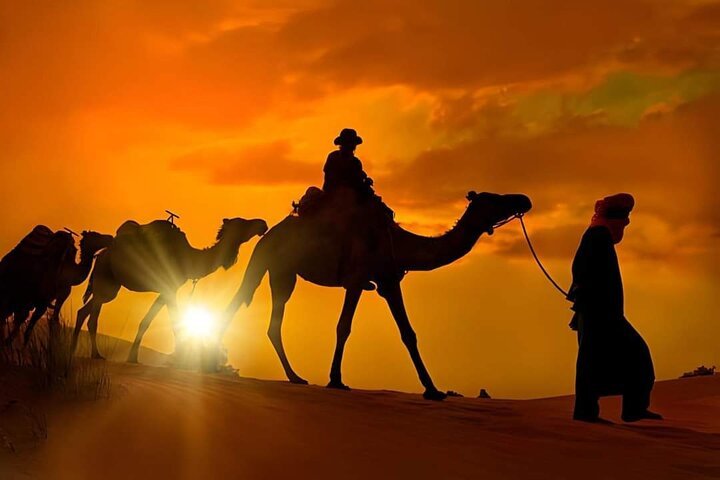
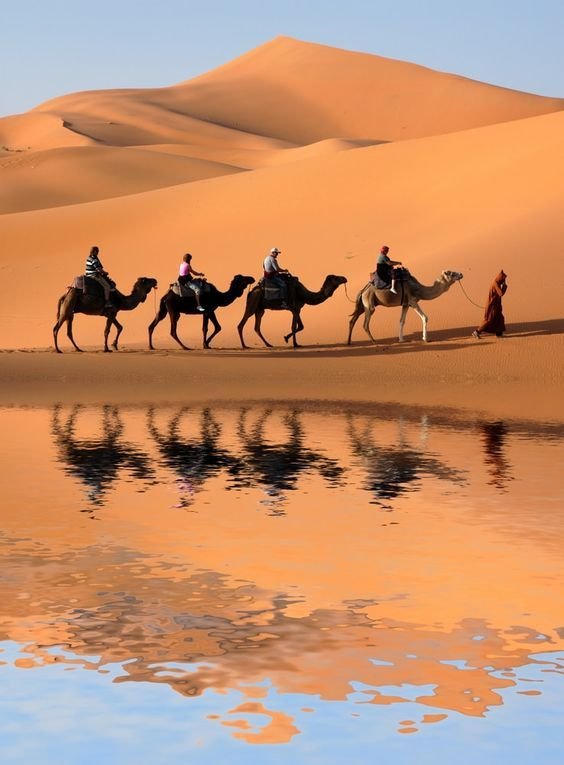
It is the quintessential Moroccan image: a silhouette of camels processing slowly across a ridge of orange sand, the sun dipping low on the horizon, casting long, dramatic shadows.
For many travelers, a camel trek into the Erg Chebbi dunes of Merzouga is the primary reason they book a flight to Morocco. It is a bucket-list moment, a scene straight out of Lawrence of Arabia.
But if you have never ridden a camel before, the reality can be a mix of excitement and anxiety. Is it scary? Is it comfortable? What should you wear?
As we head into the 2026 travel season, here is an honest, step-by-step guide on what to expect when you saddle up for the Sahara.
1. The Encounter: Meeting Your “Ship of the Desert”
Your trek usually begins in the late afternoon, around two hours before sunset. You will leave your luggage at a hotel or meeting point at the edge of the dunes (it will be transported to camp by 4×4), taking only a small backpack with you.
The camels (technically dromedaries, as they have one hump) will be waiting, resting on their knees in the sand.
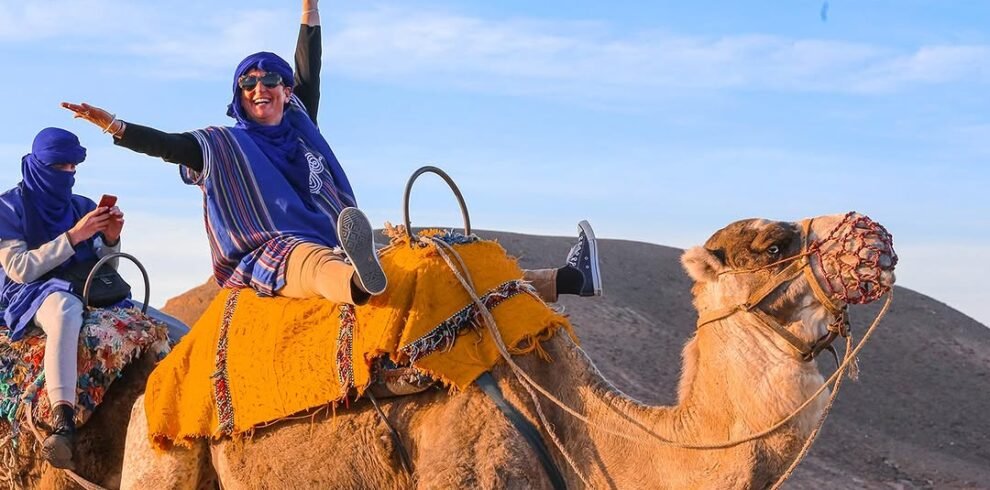
- The “Lift-Off”: This is the most adrenaline-pumping part. When a camel stands up, it does so back legs first, then front legs.
- What to do: Hold the metal handlebar tight. Lean back as it lifts its rear, then lean forward as it lifts its front. It feels like a rollercoaster for about three seconds, and then suddenly, you are six feet in the air with a commanding view of the desert.
2. The Ride: Rhythm and Views
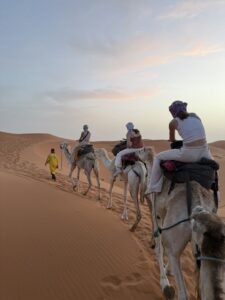
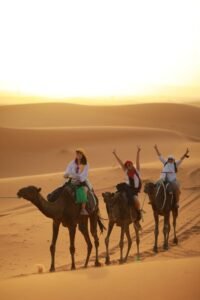
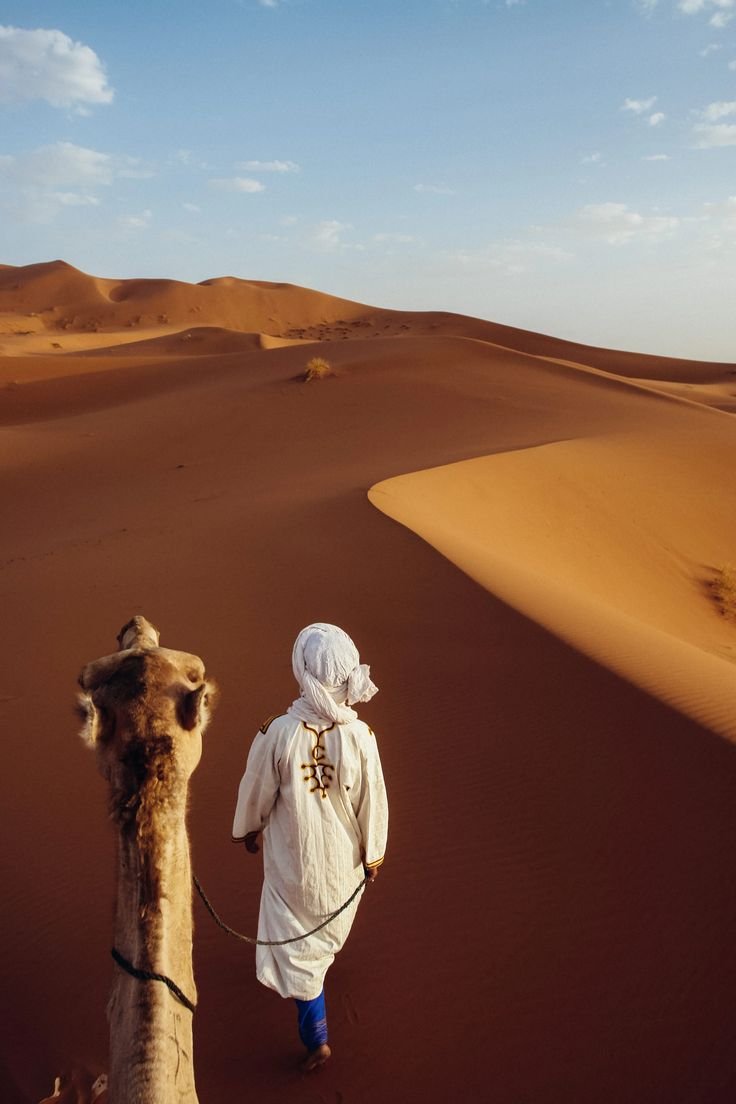
Once the caravan starts moving, the world slows down. Camels walk at a steady, rhythmic pace. They are tied together in a line, led by a local Berber guide on foot.
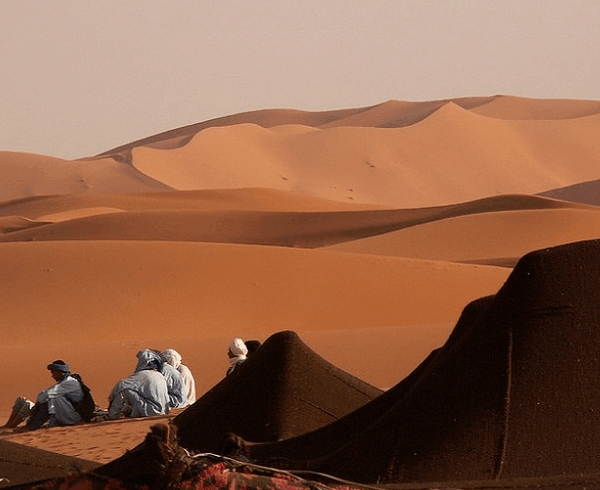
- The Scenery: This is where the magic happens. As you move deeper into Erg Chebbi, the noise of the village fades. The only sounds are the soft thud of padded hooves on sand and the wind. The dunes change color from gold to blood orange to violet as the sun lowers.
- The Comfort Level (The Honest Truth): Let’s be real—riding a camel is not like sitting in a luxury armchair. The gait is swaying and can be hard on your inner thighs.
- Pro Tip: Relax your hips and move with the animal rather than staying stiff. Most treks to the camp take about 45 to 60 minutes, which is the perfect duration: long enough to soak in the majesty, but short enough to end before your legs get too sore.
3. The Sunset Stop
About halfway to the camp, your guide will stop the caravan. You will dismount (remember: lean back, then forward!) and climb the nearest high dune.
This is the moment you traveled thousands of miles for.
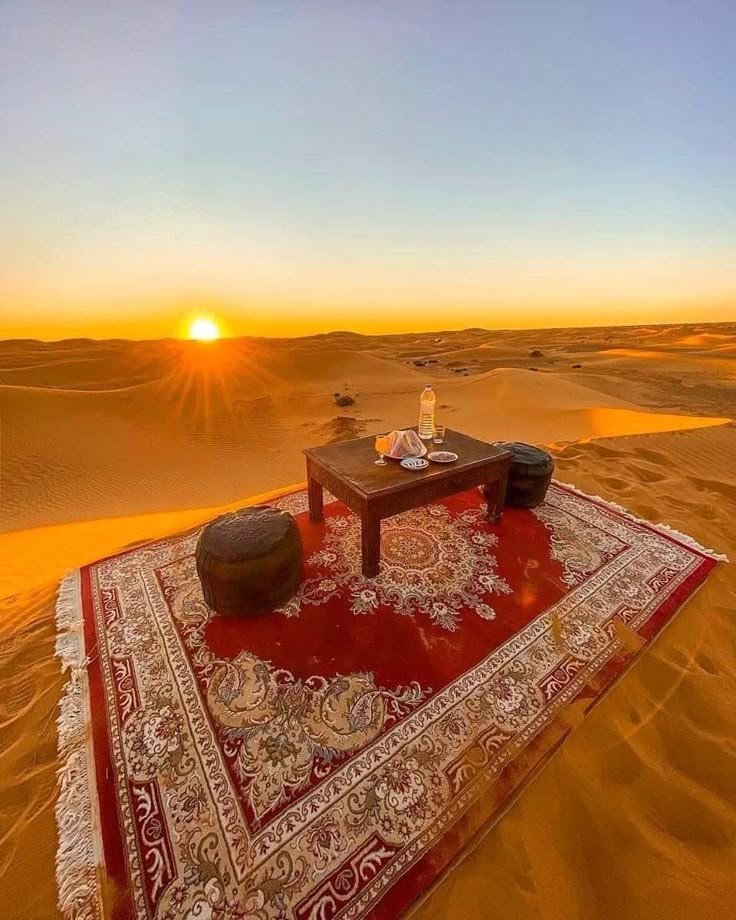
Sitting on the crest of a dune, watching the sun sink behind the endless waves of sand, is a spiritual experience. It is the perfect time for photos, or simply to sit in the profound silence of the Sahara.
4. Arrival at Camp: From Ancient to Modern
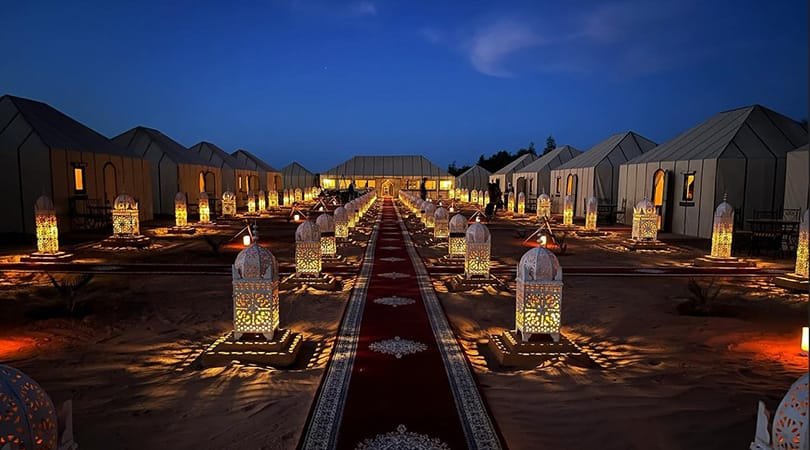
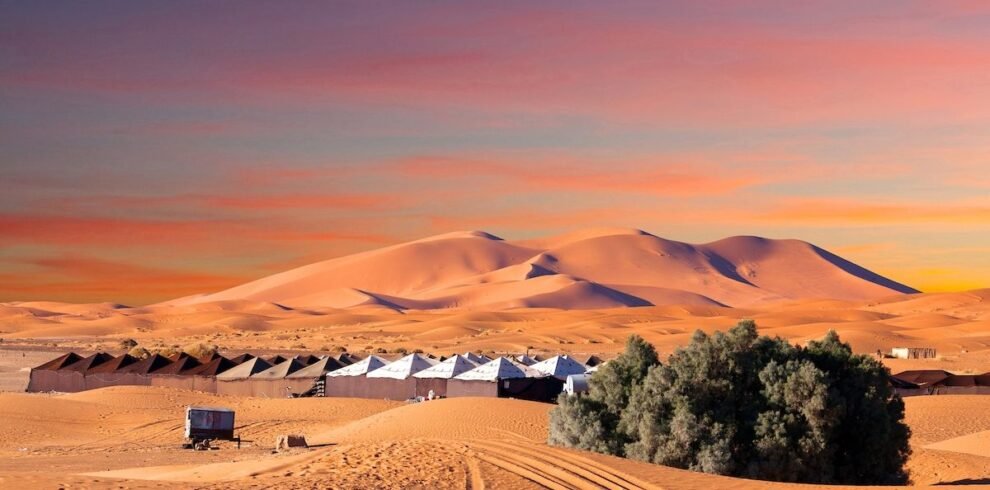
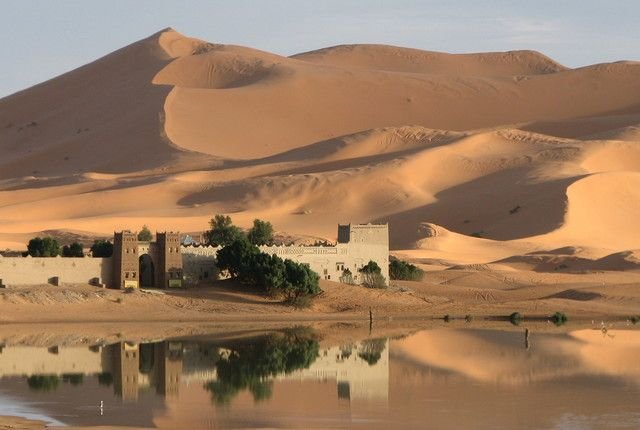
As twilight fades, you will remount for the final short ride to your desert camp. In 2025/2026, the standard for these camps has risen dramatically.
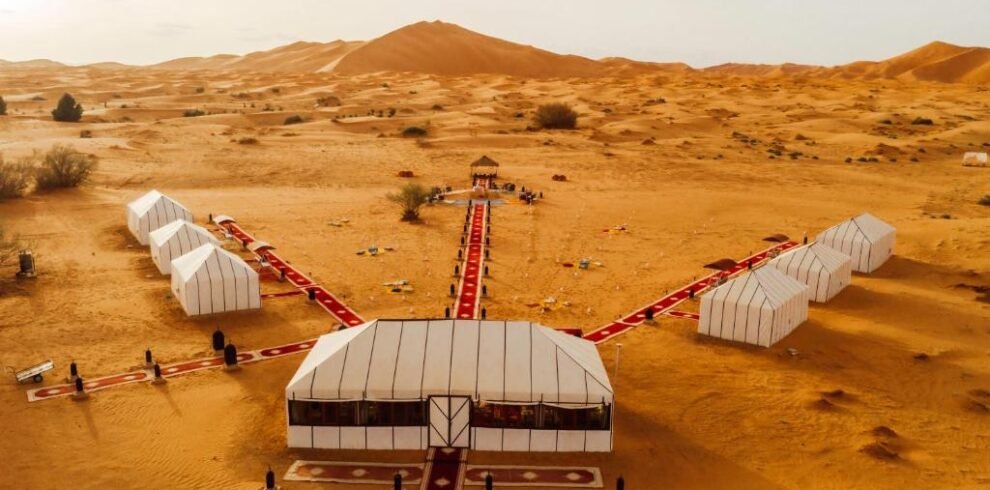
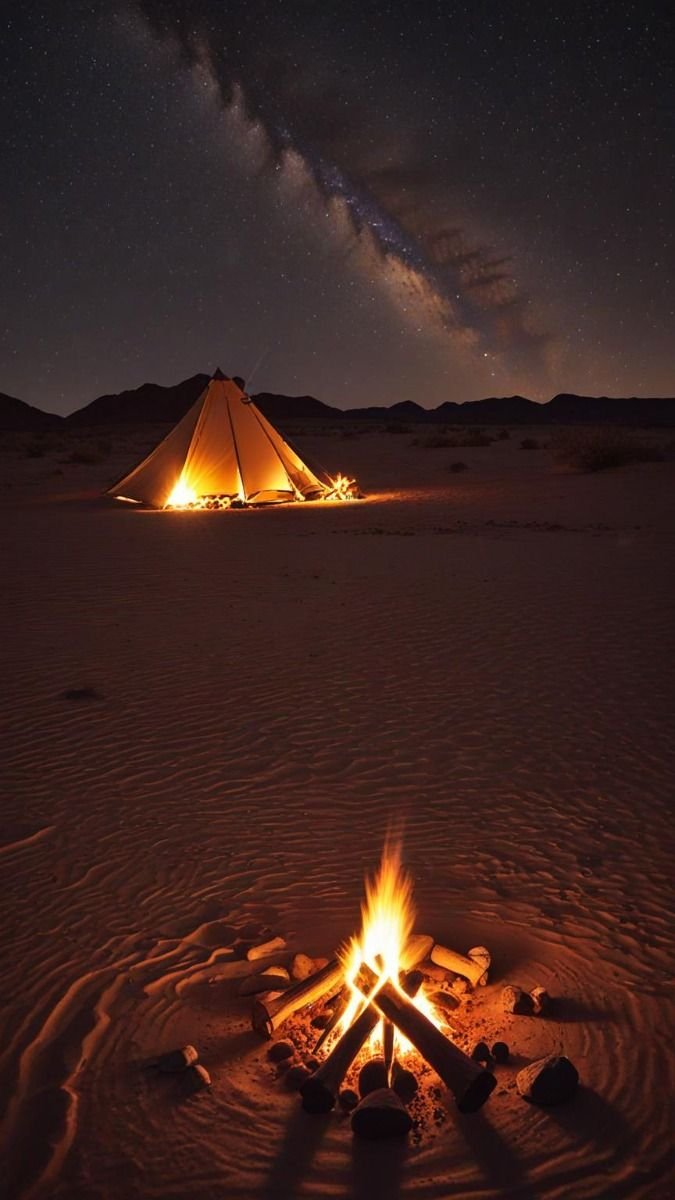
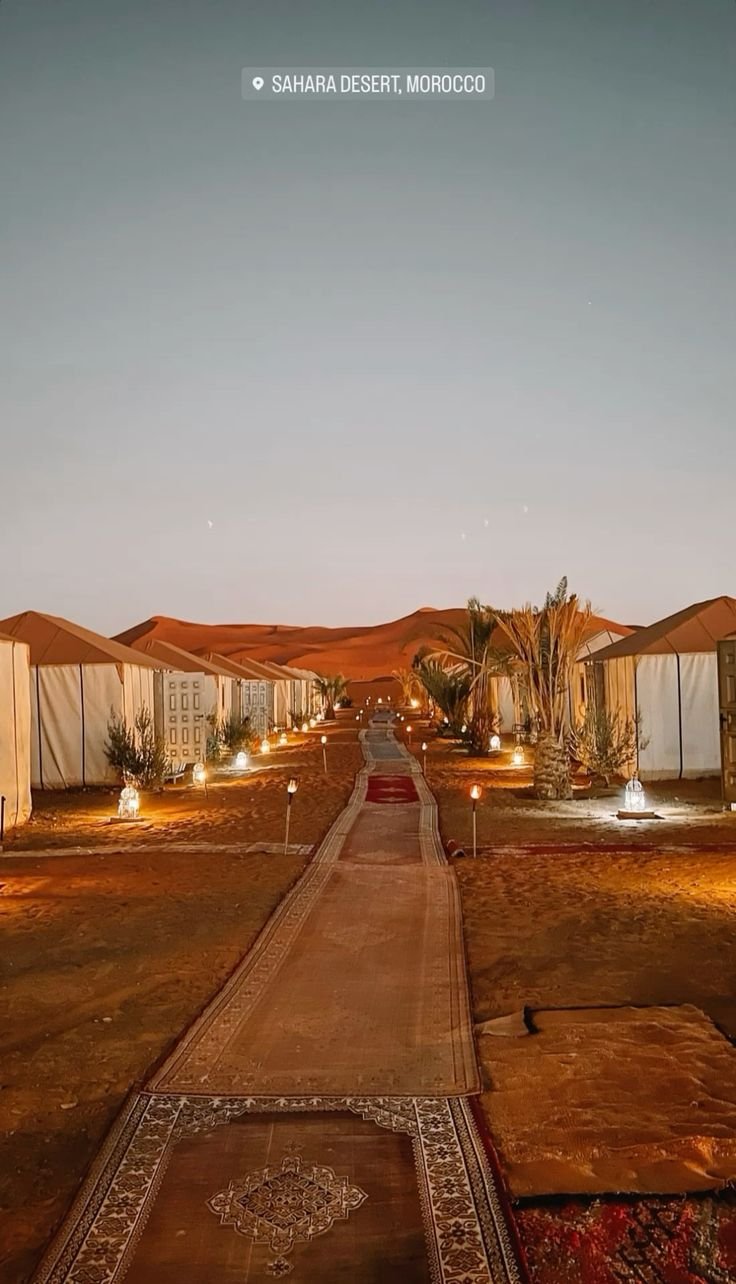
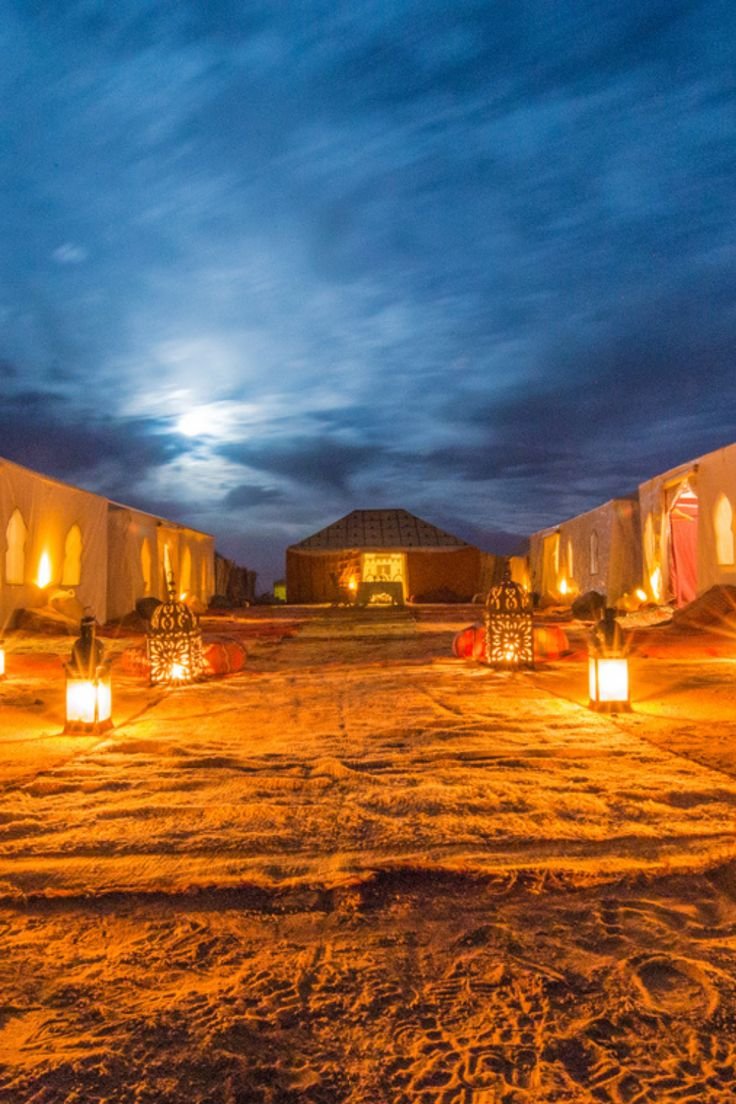
You are likely not arriving at a simple tent, but a “Glamping” site. You will be welcomed with mint tea, Moroccan cookies, and the sight of lanterns lighting up the walkways. It is a surreal contrast: arriving on an ancient mode of transport to find a tent with a real bed, electricity, and often a private en-suite bathroom.
5. What to Wear: The Camel Trek Packing List
Your comfort depends entirely on your clothing choices.
- Long Pants are Mandatory: Never wear shorts. The camel hair is coarse and itchy, and the saddle blanket can rub against bare skin. Loose-fitting majestic trousers or jeans are best.
- Closed-Toe Shoes: Sandals fall off, and sand gets everywhere. Sneakers or hiking boots are best.
- The “Chèche” (Turban): This isn’t just for style. A long cotton scarf wrapped around your head and face protects you from the sun and, more importantly, the wind-blown sand. Your guide will happily show you how to tie it properly.
- Sunglasses and Sunscreen: The desert glare is intense, even in winter.
- A Warm Jacket (Winter 2025/2026 Alert): If you are visiting now (December/January), do not underestimate the cold. Once the sun drops, the temperature plummets. You will need a fleece or jacket for the ride into camp.
6. Animal Welfare: Touring Responsibly
Modern travelers care about the ethics of their activities, and rightly so. In Merzouga, camels are the livelihood of the local families, and they are generally treated with great respect.
How to spot a happy camel:
- Look for a camel that has a firm, upright hump (a sign of good hydration and health).
- Check that there are no open sores under the saddle or ropes.
- Observe the handler’s behavior—they should be guiding the animals with vocal commands or gentle tugs, not aggression.
Note: If you have back problems or are pregnant, it is safer to skip the camel ride and ask to be taken to the camp by 4×4 instead. This is always an option!
7. The Morning After: The Sunrise Return
After a night of drumming music, tagines, and stargazing, you will be woken up before dawn.
You have two choices:
- Ride the camel back to the village as the sun rises.
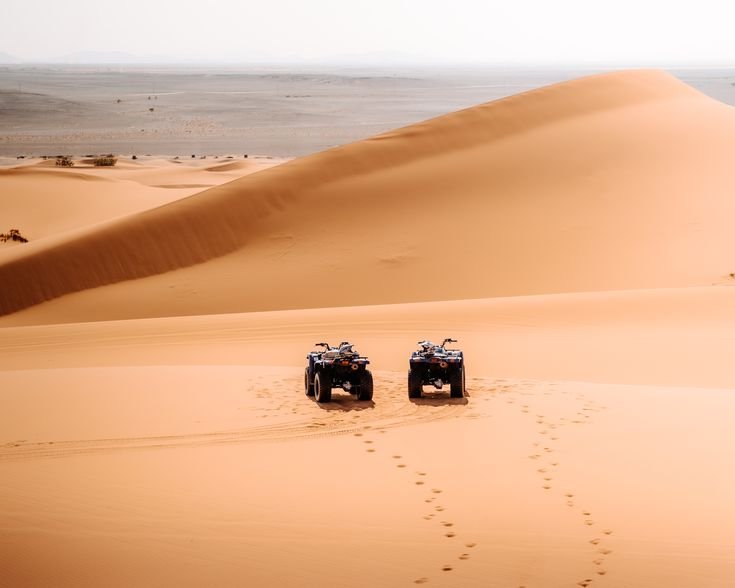
- Take the 4×4 transfer back for a quicker, smoother exit.
Many travelers choose the camel to the camp and the 4×4 back, giving them the best of both worlds.
Final Thoughts
A camel trek in Merzouga is more than just a ride; it is a bridge to the past. It forces you to slow down to the rhythm of the desert.
Yes, your legs might be a little stiff the next day. But the memory of swaying gently atop a dune, surrounded by the golden vastness of the Sahara, is worth every second.
Ready for the adventure of a lifetime?
Our [Morocco Desert Tours] include ethical, well-guided camel treks and stays in the finest luxury camps. [Book your 2026 Sahara experience today].